Inquiry
Form loading...

Why Choose Adhesive Vent Sticker for Global Sourcing?

Global sourcing teams are under pressure to protect compact products without adding bulky housings or expensive assembly steps. An Adhesive Vent Sticker offers a practical option for pressure equalization, moisture control, and particulate protection. It can sit over a small vent opening on an automotive sensor, battery enclosure, outdoor electronic device, or medical package. The result is often simple: fewer parts, cleaner assembly, and more flexible product design.

Market data supports this direction. Grand View Research valued the global automotive electronics market at approximately USD 286.6 billion in 2023, reflecting continued demand for protected sensors and control modules. Fortune Business Insights estimated the smart packaging market at USD 48.72 billion in 2023, with connected and protective packaging gaining wider industrial use. These reports do not prove that every application needs a vent sticker. They do show why small sealing components deserve closer sourcing attention.

Supplier selection should go beyond price. Engineers should review air permeability, water-entry resistance, adhesive compatibility, operating temperature, and aging performance. Testing against the product’s actual housing material is essential. A sticker that performs well on ABS may behave differently on painted metal or low-surface-energy plastics. That detail is easy to miss.

Not every supplier provides equally reliable evidence. Ask for batch records, technical data sheets, test methods, and traceability documents. ISO 9001 certification can support process confidence, but it cannot replace application testing. Product requirements should also align with relevant standards, including IEC 60529 where enclosure protection ratings apply. The best global sourcing decision is not always the cheapest one. It is the option that remains dependable after shipping, assembly, temperature cycling, and real-world use.
Why Choose Adhesive Vent Sticker for Global Sourcing?

What Is an Adhesive Vent Sticker?

Why Choose Adhesive Vent Sticker for Global Sourcing?

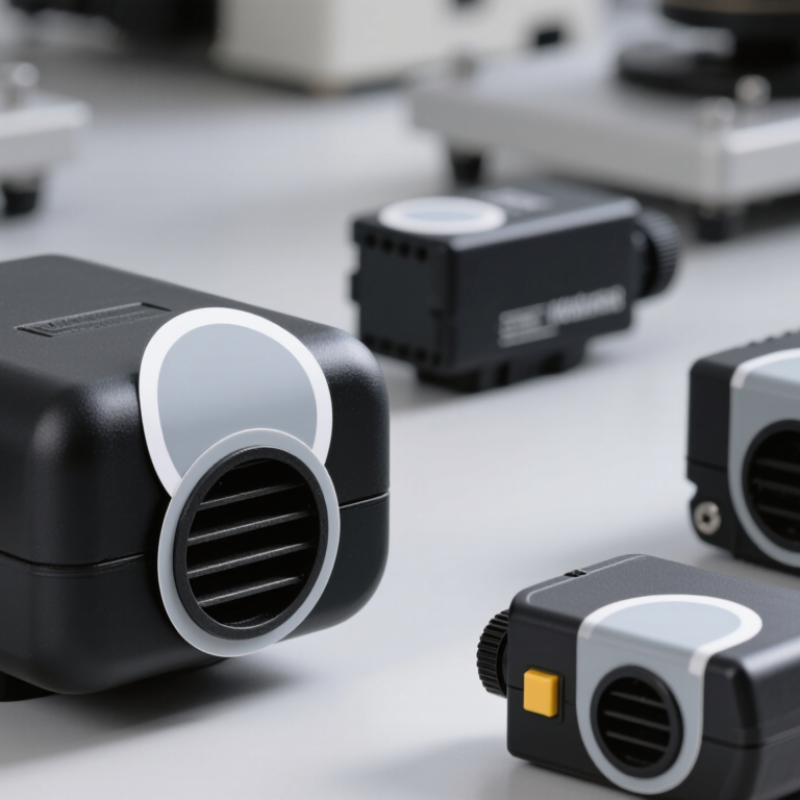
An adhesive vent sticker is a small pressure-management component with a breathable membrane and a coated adhesive backing. It attaches to an enclosure, housing, or package surface. The membrane allows trapped air and vapor to move through. It helps reduce pressure buildup during temperature changes, transport, or daily operation. At the same time, it can limit the entry of water droplets, dust, and other particles.

The structure is simple, but performance depends on details. Membrane pores, adhesive strength, surface preparation, and application pressure all matter. In practical inspections, I check whether the sticker remains attached after humidity, heat, vibration, and repeated pressure changes. A clean, dry surface is essential. Uneven plastic, oily metal, or textured paint can weaken the bond. Small gaps can become serious failure points.

An adhesive vent sticker is not a universal waterproof solution. That assumption deserves reconsideration. Product developers should confirm airflow, water resistance, temperature range, and aging performance before volume purchasing. For global sourcing, clear drawings and measurable test requirements reduce misunderstandings between suppliers. Samples should be evaluated on the actual enclosure, not only on a flat laboratory panel. Cost matters, but unstable adhesion creates larger expenses later. A reliable specification may include membrane material, adhesive type, dimensions, tolerance, packaging, and inspection criteria.
Why Choose Adhesive Vent Sticker for Global Sourcing?

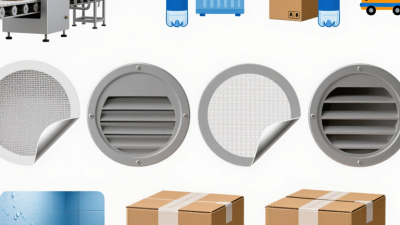
An adhesive vent sticker uses a breathable membrane to equalize pressure while helping limit liquid-water entry. The chart shows the hydrostatic pressure created by different water depths, calculated with the standard relationship P = ρgh, where water density is approximately 1,000 kg/m³ and gravitational acceleration is approximately 9.81 m/s². These reference values help sourcing teams define and compare water-resistance test requirements without relying on brand-specific data.

How Adhesive Vent Stickers Work in Product Protection

Adhesive vent stickers protect products by managing pressure inside sealed housings. During air travel, storage, or temperature changes, internal air can expand and contract. Without a vent, pressure may stress seals, distort covers, or invite moisture through weak points. A microporous membrane allows air to pass while blocking liquid water, dust, and many fine particles. The result is quieter pressure balancing and more stable product performance.

Tips: Clean the bonding surface carefully. It should be dry, smooth, and free from oil. Apply the sticker with even pressure, especially around the edges. Check the vent after assembly. A small wrinkle can create a leakage path. Select the membrane after testing heat, humidity, dust, and pressure conditions. One design may not suit every enclosure.

For global sourcing, product protection depends on consistent materials and repeatable assembly. Ask suppliers for airflow data, water-entry resistance, adhesive temperature limits, and sample inspection records. Practical testing matters more than attractive specifications. Place samples in realistic shipping and storage conditions, then inspect seals and internal surfaces. I have seen failures caused by poor surface preparation rather than weak vent material. That detail is easy to overlook. No vent solves every failure. Vent size, housing design, and assembly pressure also influence results. A careful sourcing process reduces surprises, although some performance limits may only appear after long-term testing.

Key Benefits for Global Sourcing and Manufacturing

Why Choose Adhesive Vent Sticker for Global Sourcing?

Key Benefits for Global Sourcing and Manufacturing

Global sourcing demands stable performance across suppliers, climates, and transport routes. The WTO’s Global Trade Outlook and Statistics, April 2024, forecast merchandise trade growth of 2.6% in 2024. More movement means more pressure changes during air and sea freight. Adhesive vent stickers help enclosures equalize internal pressure. They can also reduce moisture, dust, and splash intrusion when correctly specified. This protects sensors, lighting units, battery housings, and outdoor controls.

They support manufacturing flexibility. Suppliers can apply them manually or through automated assembly lines. The compact format saves space and may reduce extra housing components. However, selection cannot rely on price alone. Airflow, adhesive strength, membrane structure, and surface compatibility need testing. UNCTAD’s Review of Maritime Transport 2024 highlights continuing volatility in shipping networks. A vent that performs well in a local workshop may behave differently after humid storage, vibration, and temperature changes. That detail is easy to underestimate.

Tips: Request samples from at least two production lots. Test pressure equalization, water resistance, peel strength, and aging performance. Record results under hot, cold, and humid conditions. Ask suppliers for controlled specifications and traceability documents. Do not treat a vent sticker as a universal fix. In my experience, the overlooked surface coating causes more problems than the membrane itself. A short trial can expose that weakness before full-scale sourcing.

Material, Performance, and Compatibility Considerations

When choosing an adhesive vent sticker for global sourcing, material selection deserves careful attention. Common membrane materials include expanded PTFE, polyester, and nonwoven structures. Each offers different air permeability, water resistance, and chemical tolerance. A vent must release pressure without allowing liquid droplets to enter. That balance is critical in outdoor sensors, lighting housings, and battery enclosures.

The adhesive also matters. It should bond firmly to plastics, coated metals, and painted surfaces used in different markets. Surface energy, texture, dust, and temperature can change peel strength. In practical testing, apply the sticker to the final enclosure, not only to a smooth laboratory panel. Check adhesion after heat, humidity, vibration, and repeated pressure changes. One overlooked issue is liner removal. A difficult liner can slow assembly and create contamination.

Tips: Request material data, airflow values, water-entry results, and adhesive temperature limits. Test samples after storage and transport. Small details matter.

Compatibility is more than fitting the vent diameter. The adhesive may react with plasticizers, cleaning agents, or enclosure coatings. Color, thickness, and compression can also affect appearance and performance. Ask suppliers about batch consistency and inspection methods. A specification may look complete, yet still miss real assembly conditions. I have found that simple trials often reveal more than impressive laboratory claims. Keep records of failures, even minor ones. They help improve future sourcing decisions.

Why Choose Adhesive Vent Sticker for Global Sourcing? - Material, Performance, and Compatibility Considerations

Evaluation Dimension ePTFE Membrane Oleophobic ePTFE Membrane Polyurethane Membrane Nonwoven Polyester or Nylon
Primary function Pressure equalization and protection against liquid water and dust Pressure equalization where oils, surfactants, or automotive fluids may be present Air exchange with flexible, conformable protection for moderate environments Basic dust filtration and limited venting for lower-demand applications
Typical membrane structure Microporous expanded polytetrafluoroethylene Microporous ePTFE with an oleophobic treatment or backing layer Microporous or hydrophilic polyurethane film Spunbond, meltblown, or laminated textile web
Representative air permeability Approximately 1,000–15,000 mL/min/cm² at 1 kPa, depending on grade and test method Approximately 500–12,000 mL/min/cm² at 1 kPa, depending on treatment and construction Approximately 100–8,000 mL/min/cm² at 1 kPa, depending on film design Approximately 50–3,000 mL/min/cm² at 1 kPa, depending on basis weight
Water entry pressure Commonly about 70–200 kPa for protective vent grades Commonly about 70–200 kPa, with improved resistance to low-surface-tension liquids Often about 20–150 kPa, highly dependent on film thickness and chemistry Typically lower and more variable; commonly selected for splash or dust protection rather than immersion
Resistance to oils and chemicals Very good resistance to many chemicals; confirm exposure to concentrated solvents and process fluids Very good resistance to oils, fuels, and low-surface-tension liquids when properly treated Moderate to good; compatibility varies with solvents, oils, acids, and cleaning agents Moderate; some fibers and binders may swell, soften, or lose strength after chemical exposure
Typical continuous temperature range Approximately −50°C to +150°C; adhesive limits may be narrower Approximately −50°C to +150°C; verify treatment and adhesive limits Approximately −40°C to +100°C for many grades Approximately −20°C to +120°C, depending on fiber, binder, and adhesive system
Best substrate compatibility Clean metals, coated metals, glass, and many engineering plastics Metals, painted surfaces, and plastics exposed to automotive or industrial fluids Smooth plastics, metals, and painted housings with adequate surface energy Porous or lightly textured surfaces where strong liquid sealing is not required
Adhesive options Acrylic transfer adhesive is commonly used for durable outdoor bonding High-performance acrylic or modified acrylic for fluid and temperature resistance Acrylic, rubber, or silicone adhesive depending on temperature and surface requirements Acrylic or hot-melt adhesive; selection depends on substrate roughness and service life
Approximate peel adhesion target Typically 5–15 N/25 mm on clean stainless steel after conditioning Typically 5–15 N/25 mm, depending on adhesive and backing construction Typically 3–12 N/25 mm, with greater variation on low-energy plastics Typically 2–10 N/25 mm, depending strongly on surface texture and adhesive coat weight
Dimensional stability Excellent; low creep and stable performance across broad temperature changes Excellent; suitable for demanding thermal cycling when properly laminated Good, but some grades may stretch or relax under prolonged heat Fair to good; textile structure may compress, fray, or change thickness under load
Recommended application examples Outdoor sensors, lighting housings, battery enclosures, meters, and electronic control units Automotive electronics, power tools, industrial equipment, and fluid-exposed enclosures Consumer electronics, compact sensors, wearable devices, and general enclosures Low-cost equipment covers, indoor electronics, and applications requiring basic dust control
Global sourcing considerations Request pore-size data, water-entry results, airflow test conditions, adhesive data, and lot traceability Request oil-repellency or surface-tension test results and confirm resistance to the target fluids Compare humidity aging, hydrostatic pressure, tensile strength, and adhesive compatibility Verify fiber composition, basis weight, filtration performance, shedding, and storage conditions
Common verification methods Airflow testing, water-entry testing, thermal cycling, humidity aging, and peel adhesion testing All ePTFE tests plus fluid immersion, low-surface-tension liquid exposure, and pressure cycling Airflow, water-entry, flexing, solvent exposure, and accelerated aging tests Airflow, particle retention, splash resistance, abrasion, linting, and adhesive aging tests

Note: The numerical values are representative specification ranges for material selection and supplier comparison. Actual performance depends on membrane grade, adhesive construction, vent geometry, substrate preparation, test method, and environmental conditions. Final values should be confirmed through supplier technical data and application-specific validation.

How to Select a Reliable Adhesive Vent Sticker Supplier

Why Choose Adhesive Vent Sticker for Global Sourcing?

How to Select a Reliable Adhesive Vent Sticker Supplier

Selecting an adhesive vent sticker supplier requires more than comparing unit prices. The supplier must understand airflow, pressure balance, moisture protection, and surface compatibility. Smithers’ industry outlook identifies steady growth in pressure-sensitive label applications, driven by packaging, electronics, and industrial products. This trend creates more choices, but also more inconsistent specifications. Ask for material structure, adhesive type, vent rate, operating temperature, and expected service life.

Request test evidence before approving samples. ASTM F1249 can measure water vapor transmission, while ASTM D3330 evaluates peel adhesion. ASTM D3654 helps assess holding power under sustained loads. A reliable supplier should explain test conditions clearly, not only provide attractive numbers. ISO 9001 certification can support process control, but it does not prove that every vent sticker will perform well on your surface. Check batch records, incoming-material controls, and change-notification procedures.

Run your own trial.

Apply samples to the actual housing, coating, and production line. Expose them to heat, humidity, dust, and pressure changes. Record lifting, blocked vents, residue, and placement tolerance.

I have seen a sticker pass laboratory testing yet fail after automated application; the adhesive behaved differently on a textured coating. That possibility deserves attention.

Request traceability from raw film to finished roll, stable lead-time data, and a corrective-action process. A supplier who admits limitations may be more dependable than one promising perfect performance. Pair technical proof with a small pilot order before global sourcing.