What is the Best Acoustic Membrane for Your Needs?
Choosing the right acoustic membrane is crucial for any soundproofing project. An effective acoustic membrane can significantly improve sound isolation, making environments more comfortable and productive. According to a 2022 report by Acoustic Technologies Inc., the global acoustic membrane market is expected to grow at a rate of 7.3% annually. This growth underscores the rising need for high-performance sound control solutions.
Dr. Emily Carter, an expert in acoustic engineering, emphasizes the importance of selecting the right product. She states, "The right acoustic membrane can drastically reduce noise transfer and enhance user experience." With various materials available, users often face challenges in making informed decisions. Some membranes may not deliver the desired sound attenuation.
The complexity of the acoustic membrane market can lead to confusion. Not all membranes perform alike; quality varies based on composition and design. It's essential to consider specific needs, such as application type and environmental factors. This nuanced understanding can help individuals and businesses alike achieve optimal soundproofing results.
Understanding Acoustic Membranes: Definition and Purpose
Acoustic membranes play a crucial role in sound management. They are designed to absorb and reduce noise. These materials have various applications, from enhancing home theaters to improving studio sound quality. An acoustic membrane works by converting sound energy into heat, minimizing reverberation.
When choosing an acoustic membrane, consider the materials. Some membranes are flexible, while others are rigid. The thickness impacts sound absorption. Thicker membranes typically absorb lower frequencies better. Evaluate the space where the membrane will be used. Larger areas may require different setups than smaller rooms.
Here are some tips for effective acoustic treatment. Test different membrane placements to find what works best. Small adjustments can lead to significant improvements. Always consider aesthetic integration with your space. Choose colors and shapes that blend seamlessly. Experimenting with more than one type can also enhance sound quality. Reflection and absorption work together, so try layering membranes for optimal results.
Types of Acoustic Membranes: An Overview of Options Available
When selecting an acoustic membrane, understanding the different types available is crucial. Acoustic membranes primarily fall into two categories:
sound-absorbing and
sound-insulating materials.
Sound-absorbing membranes are designed to reduce echo and reverberation. They are ideal for spaces like recording studios and home theaters. On the other hand,
sound-insulating membranes focus on blocking noise from external sources. These work best in environments where privacy is important, such as offices or apartments.
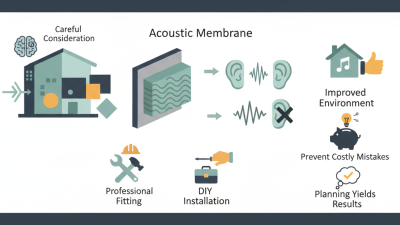
Choosing the right membrane often requires careful consideration. Assess your space and its acoustic requirements. For example, if you're in a high-noise area, sound-insulating options may suit your needs better.
Additionally, the aesthetics of the material should align with your design preferences. Remember, not all products promise the same level of performance; it is wise to consult with professionals.
Tips for success: Test different types of membranes in your space. This can help you make an informed decision.
Also, don’t underestimate the importance of installation. The effectiveness of an acoustic membrane often hinges on proper installation.
Take time to research your options. Poor choices may lead to dissatisfaction down the road.
Key Factors to Consider When Choosing an Acoustic Membrane
When selecting an acoustic membrane, consider sound absorption, thickness, and material. Sound absorption measures how well the membrane reduces noise. Different materials provide varying levels of absorption. Thicker membranes tend to deliver better sound isolation. However, they may also be bulkier and harder to install.
Environmental factors play a role as well. Consider where the membrane will be installed. Indoor applications may prioritize aesthetics, while outdoor uses require durability. Assess the space's acoustics. Hard surfaces may reflect sound rather than absorb it. Thus, choosing the right membrane is crucial for achieving desired acoustic quality.
Cost is another key factor. Higher quality materials often come with a price increase. However, investing in reliable products can lead to long-term savings on repairs or replacements. Be wary of low-cost options. They may promise excellent results but fail in performance. Balancing budget and effectiveness is essential for a satisfying installation.
Applications of Acoustic Membranes in Various Environments
Acoustic membranes play a vital role in various environments. From music studios to open offices, their applications are extensive. These membranes reduce sound transmission effectively. They can absorb or isolate sound, depending on the design and material.
In concert venues, acoustic membranes enhance sound quality. They control reverberation and improve clarity. Technicians choose materials based on the venue’s size and purpose. Understanding the setting is essential for optimal results. Different environments require tailored solutions.
Tips: Consider the thickness of the membrane. Thicker membranes usually absorb lower frequencies better. Also, assess the existing materials in your space. Mixing membrane types can yield better outcomes.
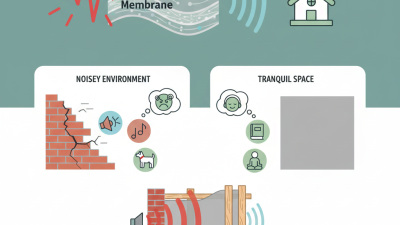
In residential buildings, acoustic membranes help create peaceful living spaces. They minimize noise between rooms, making homes comfortable. Often, they are used in shared walls and ceilings. Homeowners should prioritize quality for long-lasting benefits.
Tips: Test a few different materials before making a decision. Listen to how each option performs in your specific environment. Don't overlook the importance of proper installation; it’s a key aspect of effectiveness.
What is the Best Acoustic Membrane for Your Needs? - Applications of Acoustic Membranes in Various Environments
| Environment |
Acoustic Membrane Type |
Thickness (mm) |
NRC Value |
Applications |
| Recording Studio |
Polymer-Based Membrane |
5 |
0.95 |
Sound insulation and absorption |
| Office Space |
Mass Loaded Vinyl |
4 |
0.85 |
Reduction of ambient noise |
| Concert Hall |
Perforated Membrane |
10 |
0.90 |
Enhanced acoustic characteristics |
| Home Theater |
Fiberglass Membrane |
25 |
0.92 |
Sound clarity and richness |
| Industrial Application |
Acoustic Foam Membrane |
15 |
0.80 |
Noise reduction in machinery |
How to Install and Maintain Acoustic Membranes for Optimal Performance
Installing and maintaining acoustic membranes is crucial for achieving optimal sound performance in any environment. Proper installation involves strategic placement. For instance, mounting membranes on walls and ceilings can significantly reduce noise transfer. Research indicates that installing membranes with a thickness of at least 2 inches can enhance sound absorption by up to 40%. This is especially significant in spaces like recording studios or offices.
Maintenance, although often overlooked, plays a vital role in preserving acoustic effectiveness. Periodic inspections help identify wear or damage. Regular cleaning with non-abrasive materials prevents dust accumulation, which can degrade performance over time. In many cases, neglecting maintenance can lead to a decrease in sound insulation effectiveness, sometimes by as much as 15%. To mitigate these risks, consider establishing a routine check every six months.
Be aware that environmental factors can impact membranes. For example, humidity and temperature fluctuations may affect adhesion and material integrity. Using materials suitable for local conditions can mitigate these issues, ensuring durability. An estimated 20% of acoustic failures stem from improper environmental considerations. Keeping these factors in mind is essential for maintaining the efficiency and longevity of your acoustic membranes.
Sound Absorption Coefficient of Different Acoustic Membranes
This bar chart illustrates the sound absorption coefficients of various acoustic membranes. Choosing the right membrane based on its absorption capacity can significantly improve sound insulation in your space.