How to Choose the Right Acoustic Vent Membrane for Your Building Needs
In the realm of building acoustics, the selection of the right Acoustic Vent Membrane is pivotal to achieving optimal sound insulation and ventilation balance. According to a recent report by the International Acoustic Society, improper specifications in acoustic materials can lead to an increase in noise pollution levels by up to 30%, significantly impacting occupant comfort and well-being. As such, understanding the characteristics and applications of Acoustic Vent Membranes is crucial for architects and builders alike.
Expert opinions in the field highlight the importance of tailored solutions for specific building needs. Dr. Emily Hart, a renowned acoustic engineer, emphasizes, "Choosing the right Acoustic Vent Membrane not only improves sound quality but also enhances energy efficiency in buildings." This underscores the necessity of informed decision-making when assessing various membrane options. By considering factors such as material composition, thickness, and installation techniques, professionals can ensure that their projects meet both acoustic and environmental standards.
In conclusion, the right Acoustic Vent Membrane serves as an essential component in modern construction, fostering a balance between comfort and functionality. As the industry continues to evolve, staying updated on best practices and expert insights will empower stakeholders to make informed choices in their building designs.

Understanding Acoustic Vent Membranes and Their Importance
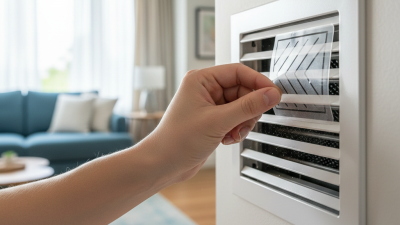
Acoustic vent membranes play a critical role in modern building design, particularly in environments where noise control and ventilation are essential. These membranes are designed to allow air exchange while reducing the transmission of sound, making them invaluable in residential and commercial applications. According to a report from the National Institute of Standards and Technology (NIST), effective sound insulation can reduce noise levels by as much as 50%, significantly improving the comfort of occupants and enhancing the overall quality of life within a building.
Understanding the importance of acoustic vent membranes begins with recognizing their dual function: they provide essential airflow while serving as a barrier to unwanted sound. In dense urban areas, for instance, the average noise levels can reach 70 dB, which is disruptive to human health. A study by the World Health Organization (WHO) suggests that prolonged exposure to noise pollution can lead to various health issues, including stress and sleep disorders. By properly integrating high-quality acoustic vent membranes, building designers can mitigate these risks, ensuring that indoor environments not only remain comfortable but also conducive to well-being.
When selecting the right acoustic vent membrane for specific building needs, factors such as material composition, thickness, and the acoustic rating must be considered. The International Organization for Standardization (ISO) guidelines emphasize the importance of matching the membrane’s specifications with the intended acoustic performance requirements to achieve optimal results. The appropriate choices can lead to a balanced implementation of sound insulation and ventilation, ultimately contributing to sustainable building practices and enhancing energy efficiency.
How to Choose the Right Acoustic Vent Membrane for Your Building Needs
| Membrane Type |
NRC Rating |
Application |
Durability |
Cost per Sq Ft |
| Polyester Acoustic Membrane |
0.95 |
Commercial Spaces |
High |
$2.50 |
| Foam Acoustic Membrane |
0.80 |
Recording Studios |
Moderate |
$1.80 |
| Mineral Wool Acoustic Membrane |
0.90 |
Theaters |
Very High |
$3.00 |
| Vinyl Acoustic Membrane |
0.70 |
Open Spaces |
Moderate |
$1.50 |
| Fiberglass Acoustic Membrane |
0.85 |
Office Spaces |
High |
$2.20 |
Key Factors to Consider When Choosing Acoustic Vent Membranes
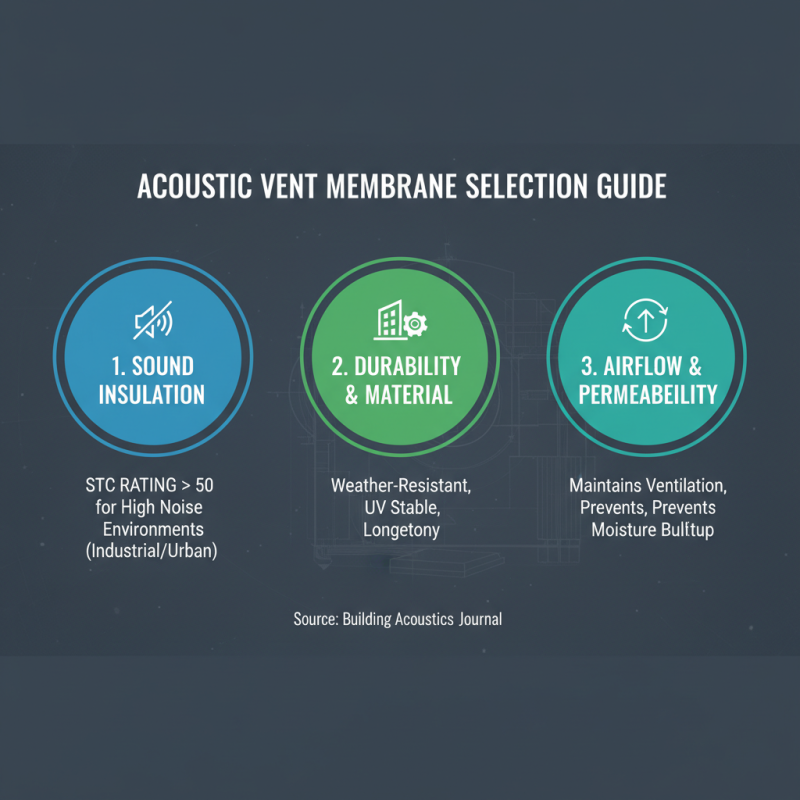
When selecting the right acoustic vent membrane for your building, several key factors come into play. First, consider the sound insulation performance. According to a report by the Building Acoustics Journal, membranes exhibiting an STC (Sound Transmission Class) rating above 50 are effective for environments experiencing high noise levels, such as industrial areas or urban settings. This rating indicates that the membrane can significantly reduce the transmission of sound, ensuring a more peaceful indoor environment.
Another factor to take into account is the material composition of the acoustic vent membrane. High-quality membranes often utilize a combination of mass-loaded vinyl and foam materials, which not only enhance sound attenuation but also improve the overall durability of the system. A study from the Acoustic Society of America highlights that membranes made from these materials can perform better in temperature variations and moisture resistance, leading to a longer lifespan and reduced maintenance costs.
Tips: Always ensure that the chosen acoustic vent membrane aligns with the specific requirements of your project, including local building codes and environmental conditions. Conducting a thorough analysis of your space's acoustic needs will also aid in selecting the most effective solution. Remember, professional installation plays a significant role in achieving optimal performance, so don’t overlook this aspect in your planning process.
Different Types of Acoustic Vent Membranes and Their Features
When selecting an acoustic vent membrane for your building needs, it is crucial to understand the various types available and their unique features.
Acoustic vent membranes are designed to minimize sound transmission while enabling airflow within a building. Common types include barrier membranes, absorption membranes, and hybrid systems.
Barrier membranes, typically made from dense materials, provide excellent sound isolation by reflecting sound waves. Studies have shown that implementing high-density barrier membranes can reduce noise levels by up to 30 decibels, which is significant in urban environments where sound pollution is prevalent.
Absorption membranes, on the other hand, are designed to absorb sound energy rather than reflect it. These membranes are often made from porous, lightweight materials that can help improve the overall acoustics of a space.
According to recent reports from the Building Acoustics Association, environments utilizing absorption membranes saw a 15% increase in occupant comfort, as background noise levels were effectively reduced.
Hybrid systems combine elements of both barrier and absorption technologies, providing a versatile solution that accommodates various acoustic challenges. By understanding the specific needs of a building and the distinct features of each membrane type, decision-makers can enhance both the acoustical performance and comfort of their spaces.
Evaluating Performance Specifications for Acoustic Vent Membranes
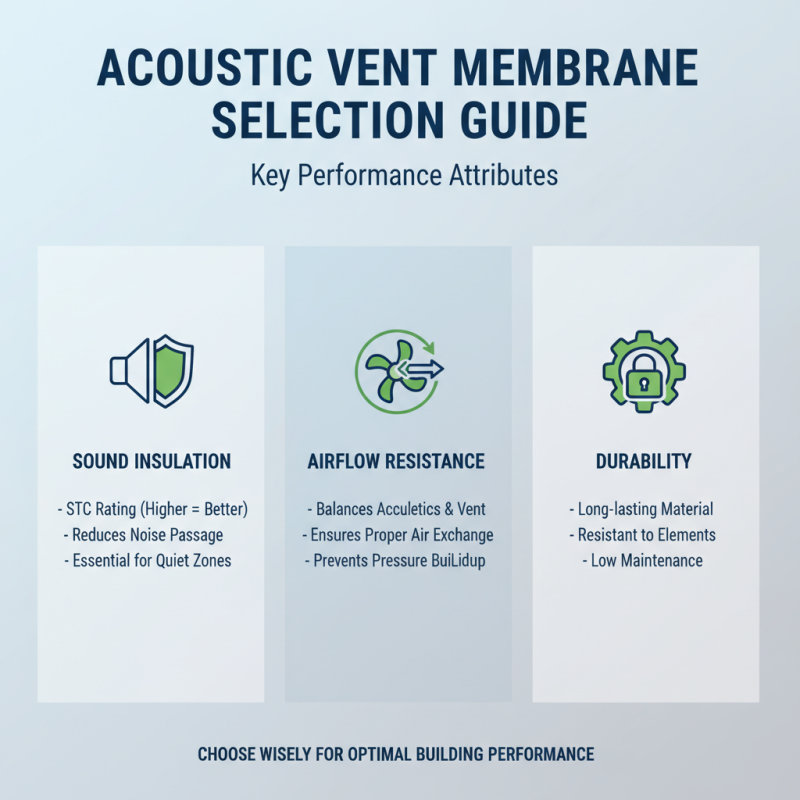
When selecting the right acoustic vent membrane for your building, it is crucial to evaluate its performance specifications thoroughly. Key attributes to consider include sound insulation, airflow resistance, and durability. Start by reviewing the sound transmission class (STC) rating, which indicates the material's effectiveness in reducing sound passage. Higher STC ratings generally mean better sound isolation, making it essential for environments where noise reduction is a priority. Additionally, ensure the membrane has the appropriate airflow properties, as these will determine its ability to balance acoustic performance with ventilation needs.
Tips: It’s beneficial to compare membranes under similar conditions; consider testing them in real-life applications when possible. Pay attention to the material composition; membranes made of high-quality materials often exhibit superior performance in both soundproofing and longevity. When discussing performance specifications with manufacturers or contractors, ask for detailed test results to validate the claims made about the product.
Another critical aspect to assess is the overall compatibility of the acoustic vent membrane with your building's design and function. Assess how the membrane integrates with other materials and systems in your structure. Be sure to inquire about installation requirements, as some membranes may necessitate specific methods or additional components to achieve their advertised performance. Understanding these factors will help ensure that you make an informed decision tailored to the unique needs of your project.
Installation Considerations for Acoustic Vent Membranes
When considering the installation of acoustic vent membranes, several key factors must be taken into account to ensure optimal performance and compliance with building codes. First, it is essential to assess the building's specific acoustic requirements. According to a report by the Acoustic Society of America, inappropriate venting can lead to sound transmission levels exceeding acceptable limits, which can disrupt a building's intended use. This highlights the necessity of choosing a membrane that not only fits the physical dimensions of the vents but also caters to the acoustic insulation needs dictated by the building's function.
Additionally, the installation environment plays a crucial role in the effectiveness of the acoustic vent membrane. Factors such as humidity, temperature fluctuations, and exposure to external elements can affect the material's longevity and sound absorption characteristics. The National Institute of Standards and Technology (NIST) emphasizes the importance of adhering to manufacturer guidelines concerning installation conditions; for instance, membranes should be installed on a dry day to prevent moisture infiltration. Furthermore, any disruptions in the airtight seal can significantly compromise sound attenuation, making proper installation techniques vital for achieving the desired acoustic performance.