Inquiry
Form loading...
Choosing a Black Eptfe Membrane in 2026 requires more than comparing prices or surface color. It demands a clear understanding of airflow, water resistance, chemical exposure, temperature, and installation conditions. A membrane that performs well on a clean laboratory bench may struggle beside road dust, oil mist, or repeated thermal cycling.
Robert W. Gore, the ePTFE pioneer, described the material’s value through a practical principle: “The key is understanding how the structure delivers performance in the real application.” That idea still matters. Black pigmentation can improve visual uniformity and reduce visible staining, but it does not automatically improve filtration, durability, or weather resistance. Buyers should request verified data for pore size, air permeability, hydrostatic pressure, tensile strength, and continuous operating temperature.
Look closely at the test method.
Ask whether the figures represent new samples or aged membranes. Also check whether the membrane is laminated to polyester, nylon, or another support layer. The backing material often decides how the product behaves during sealing, vibration, and outdoor exposure. Supplier experience matters here. Reliable manufacturers should provide traceable test reports, batch information, and application guidance.
There is no universal best choice. A breathable enclosure, industrial filter, medical device, and outdoor sensor may need different constructions. This is where selection can become uncomfortable. Buyers sometimes choose the darkest or cheapest option first, then discover that poor bonding causes failure. A small pilot test, using real contaminants and realistic temperature cycles, can reveal weaknesses before full production. In 2026, careful validation remains more valuable than attractive specifications.
How to Choose Black ePTFE Membrane in 2026?
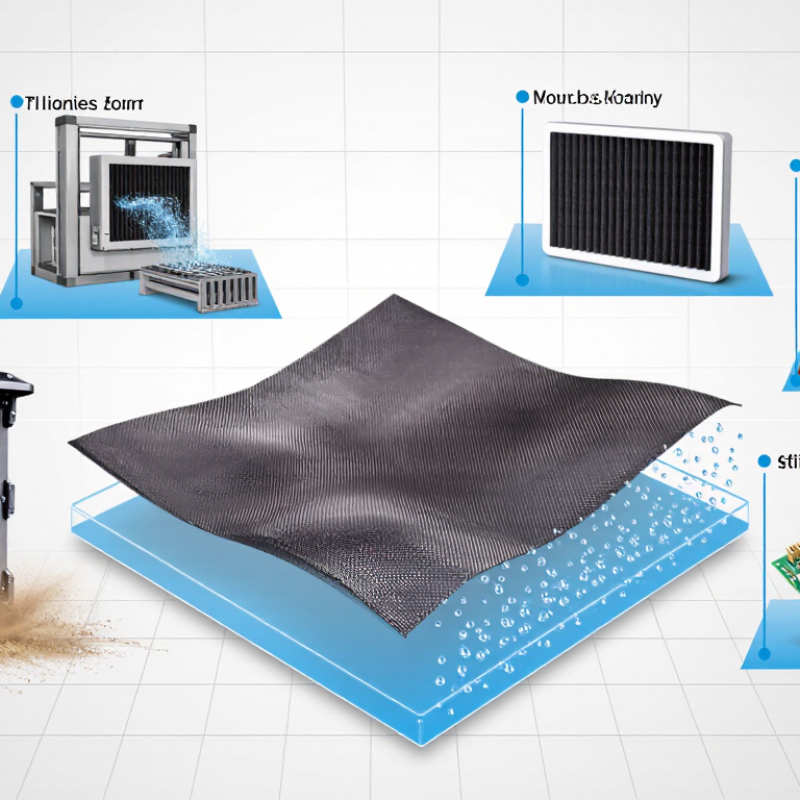
Black ePTFE is an expanded polytetrafluoroethylene membrane with a network of micropores. In many technical grades, these pores measure below 2 µm. A single square inch may contain billions of pores. This structure can block liquid water while allowing air and vapor to pass. However, pore size alone does not define performance. Pore distribution, membrane thickness, surface treatment, and lamination quality also matter. Always request test data instead of trusting a strong sales phrase.
During selection, match the membrane to its working environment. Check air permeability, water-entry pressure, tensile strength, temperature resistance, and chemical compatibility. Black pigmentation may support light shielding or visual consistency, but it does not automatically improve filtration or durability. I have seen specifications that looked impressive until humidity and repeated bending changed the result. Laboratory data is useful, yet real operating conditions can be less polite.
Tips: Compare samples under heat, moisture, pressure, and flexing. Confirm whether the reported pore size is average, maximum, or a distribution range. Ask for batch consistency records and a clear testing method. Do not select the thinnest membrane only to reduce cost. It may save money briefly, then create handling problems. A small pilot test often reveals more than a polished data sheet.
| Selection Dimension | Typical Reference Range | What the Value Means | Recommended Choice Guidance |
|---|---|---|---|
| Pore-size definition | Approximately 0.05–2.0 µm | The membrane contains interconnected micropores; “below 2 µm” is a useful classification boundary, not a guarantee that every pore has the same diameter. | Choose the smallest validated pore size that still provides the required gas or vapor flow. |
| Estimated pore population | Billions to tens of billions per square inch | Pore count varies strongly with pore-size distribution, porosity, thickness, and measurement model. It should not be treated as a universal nominal value. | Request pore-size distribution and porosity data rather than relying on pore count alone. |
| Basis-weight thickness | About 10–250 µm | Thinner membranes generally reduce diffusion distance and material weight; thicker membranes can improve handling and mechanical robustness. | Use thin grades for compact vents and filtration layers; use thicker grades when puncture resistance and handling are priorities. |
| Porosity | Approximately 30–85% by volume | Higher porosity usually increases gas flow but may reduce dimensional stability and liquid-pressure resistance. | Select higher porosity for rapid pressure equalization and lower porosity for stronger liquid-blocking performance. |
| Air permeability | Application-dependent; commonly specified in L/m²/s or Gurley seconds | Airflow is controlled by pore size, porosity, thickness, test pressure, and test area. Different test methods are not directly interchangeable. | Compare only results measured with the same standard, pressure differential, and conditioning procedure. |
| Water-entry pressure | Typically tens to several hundred kPa for hydrophobic grades | This is the pressure at which water begins to penetrate under a defined test condition. Smaller pores and greater membrane thickness generally raise the value. | Choose a rating above the maximum real-world pressure, including vibration, impact, and aging margins. |
| Surface wetting | Hydrophobic; water contact angle commonly above 90° | Hydrophobicity helps resist liquid water while allowing gases and water vapor to pass through the microporous structure. | Confirm performance with the actual liquid, surfactants, oils, and contaminants used in the application. |
| Chemical resistance | Very high resistance to most acids, bases, and solvents at moderate temperatures | PTFE is chemically inert in many environments, but additives, seals, adhesives, and extreme process conditions may limit system compatibility. | Evaluate the complete assembly, not only the membrane polymer. |
| Temperature capability | PTFE melting point: approximately 327°C; practical continuous-use limits are commonly much lower | Melting point is not the same as recommended operating temperature. Creep, support materials, pigment, and sealing conditions affect the usable range. | Specify continuous temperature, peak temperature, exposure time, and pressure together. |
| Black color function | Visible-light opacity: formulation-dependent | Black pigmentation can reduce visible-light transmission and improve visual masking, but it may affect heat absorption, color consistency, and some mechanical properties. | Request optical, thermal-aging, and extractables data for applications exposed to sunlight or high radiant heat. |
| Tensile strength | Often specified separately in machine and transverse directions | Expanded PTFE is anisotropic because stretching creates an interconnected node-and-fibril structure. | Check orientation, elongation, tear strength, and puncture resistance for the intended converting process. |
| Particle retention | Defined by the tested pore-size rating and challenge-particle method | Nominal pore size does not automatically equal absolute filtration performance; efficiency depends on particle size, aerosol or liquid conditions, and test protocol. | Ask for retention curves and test reports using the same fluid and particle type as the application. |
| Common use categories | Venting, breathable barriers, liquid-resistant covers, filtration support, and protective membranes | The correct grade depends on the balance between airflow, liquid resistance, contamination control, mechanical strength, and appearance. | Define the primary requirement first, then verify secondary requirements through application testing. |