How to Choose the Right Acoustic Eptfe Membrane for Your Project?
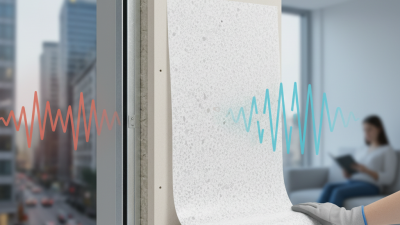
Choosing the right Acoustic Eptfe Membrane for your project can be challenging. With numerous options available, it is crucial to understand your specific needs. The Acoustic Eptfe Membrane plays a significant role in soundproofing and enhancing acoustics. Its unique properties make it suitable for various applications, including commercial and residential settings.
When selecting an Acoustic Eptfe Membrane, consider factors like material quality, thickness, and performance specifications. Each project demands a careful evaluation of these aspects. It's not just about aesthetics but functionality, too. Sometimes, what seems perfect may not deliver the expected results.
Reflect on your project requirements and the environment in which the membrane will be used. You might realize that the most popular choice isn't necessarily the best fit for you. This realization can guide you toward making a more informed decision. Your choice should resonate with your project's specific acoustic goals and long-term durability needs.
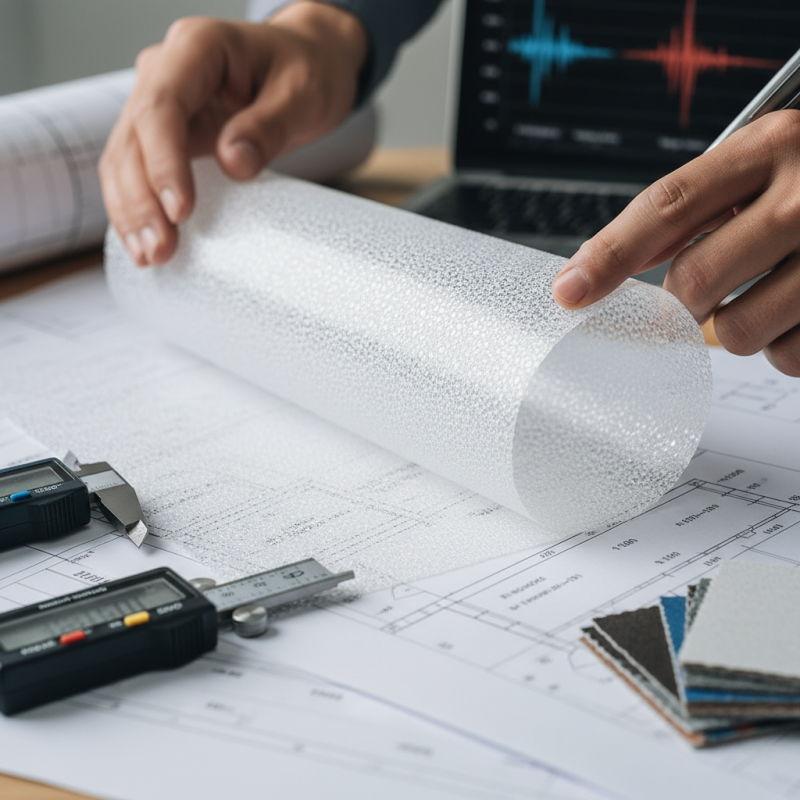
Understanding Acoustic EPTFE Membranes and Their Applications
Acoustic EPTFE membranes are essential in soundproofing applications. They are made of expanded polytetrafluoroethylene, offering unique sound absorption properties. These membranes can reduce noise levels significantly in various environments. Their lightweight nature makes them easy to install in different settings.
Understanding the specific needs of your project is crucial. Are you working on a commercial building, a recording studio, or perhaps a residential area? Different environments require distinct approaches. For instance, a studio may need superior sound absorption. Meanwhile, a busy office might prioritize a balance between sound control and aesthetics. Each application demands careful consideration.
Consider the thickness and density of the membrane as well. Thicker membranes often absorb lower frequencies better, yet they may not fit all budgets. Some users might focus too much on performance and overlook practical aspects. This balance can be challenging. Ensure you address both technical specifications and installation ease for optimal results. These details matter greatly in achieving your project's acoustic goals.
How to Choose the Right Acoustic EPTFE Membrane for Your Project?
| Property |
Description |
Applications |
Performance |
| Material |
Expanded PTFE (EPTFE) |
Sound insulation in various environments |
High sound absorption coefficient |
| Thickness |
1 mm to 5 mm |
Wall panels, ceilings, and acoustic enclosures |
Varied performance based on thickness |
| Porosity |
High porosity for effective sound absorption |
Restaurants, offices, and theaters |
Improved acoustic behavior |
| Fire Resistance |
Class A fire rating |
Commercial buildings, industrial facilities |
Meets safety regulations |
| Durability |
Long-lasting and resistant to harsh conditions |
Outdoor applications and infrastructure |
Minimal maintenance required |
Key Factors to Consider When Selecting an Acoustic EPTFE Membrane
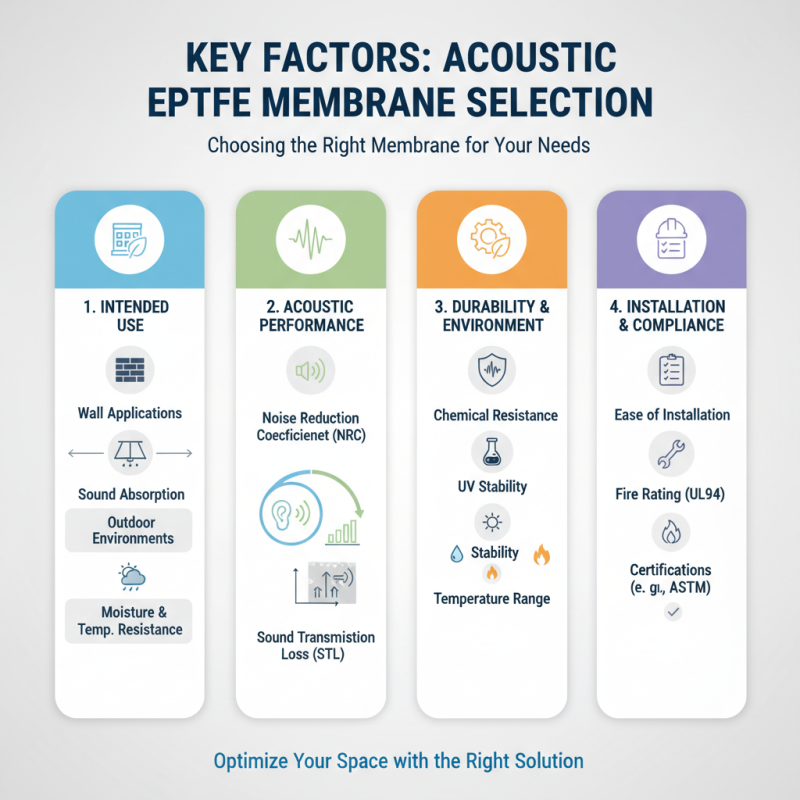
Choosing the right acoustic ePTFE membrane requires careful consideration. The first factor to think about is the intended use. Will it be for wall applications, ceilings, or outdoor environments? Each setting demands different properties. For instance, membranes used outdoors need to withstand moisture and temperature changes. In contrast, indoor applications focus on sound absorption.
Another critical aspect is the membrane’s thickness. Thicker membranes usually provide better sound isolation. However, they might also add weight and complexity to the installation process. Consider the specific sound frequencies you aim to attenuate. Different membranes target different frequency ranges. Ensure you select one that aligns with your project's acoustic goals.
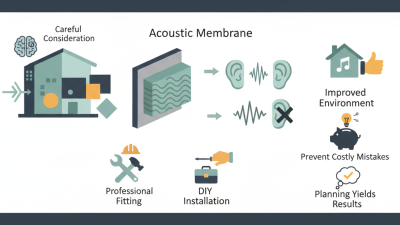
Finally, pay attention to the installation requirements. Some membranes might need specialized equipment or skills for installation. This can increase project costs and timelines. Reflection on your team's capabilities is essential here. Ask yourself if the choice aligns with your budget and expertise. Choosing the wrong membrane can lead to disappointing results, so weigh your options carefully.
Evaluating Performance Characteristics of Acoustic EPTFE Membranes
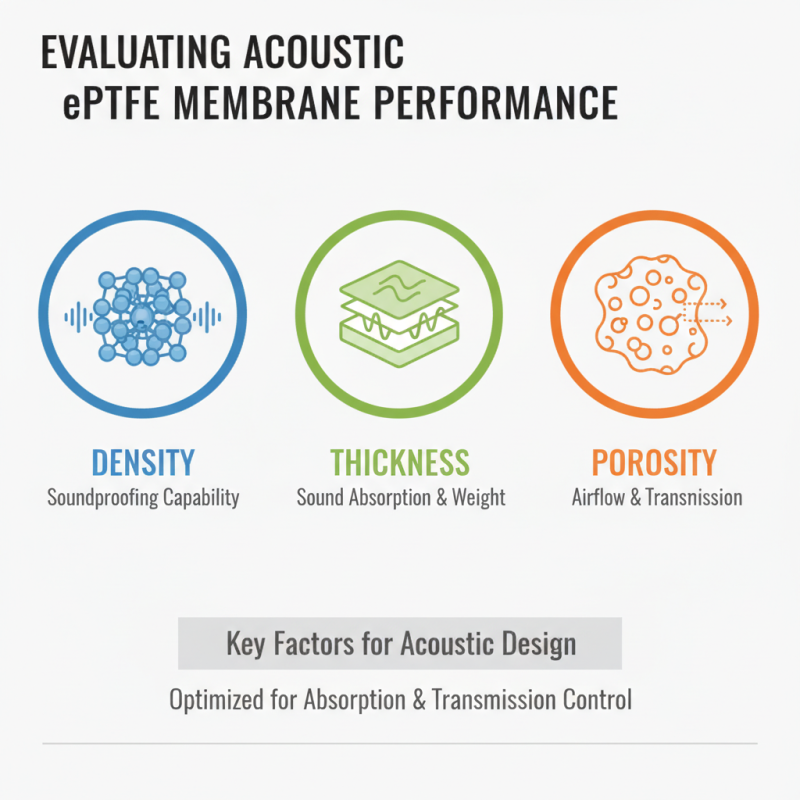
When selecting the right acoustic EPTFE membrane, performance characteristics are crucial. Acoustic membranes influence how sound is absorbed or transmitted. It's essential to understand their density, thickness, and porosity. Densities can vary, impacting soundproofing capabilities. Membranes with greater thickness can absorb more sound waves, but they might also be heavier. Each detail alters the final outcome of your acoustic design.
Consider the environment where the membrane will be used. Will it be in a music studio or an open office? The surroundings dictate specific performance requirements. Testing the membrane in your space can provide valuable insights. Sound absorption doesn’t always align with the specifications listed. Real-world applications often reveal unexpected results.
You may find that some membranes underperform despite high ratings. This discrepancy can lead to frustration. It’s vital to adjust expectations based on actual performance data, not just theoretical benchmarks. Regular assessments will ensure that the chosen membrane continues to meet your needs. Embrace flexibility and be ready to explore different options as projects evolve.
Assessing Cost-Effectiveness for Your Acoustic EPTFE Project
When considering the cost-effectiveness of acoustic EPTFE membranes, one must analyze several factors. The initial material costs are just one part of the equation. According to a recent industry report, the total lifecycle costs of acoustical materials can exceed initial purchase prices by up to 50%. This long-term financial aspect often gets overlooked in projects.
Tips: Always calculate maintenance and replacement costs. This can shift the overall budget significantly. A less expensive material may lead to higher long-term costs due to frequent replacements.
Another crucial factor is the installation process. Complex installations can escalate costs quickly. For example, labor fees can account for as much as 30% of the total project budget. A straightforward installation process can greatly improve cost efficiency.
Tips: Assess the installation requirements early. This helps in making informed choices. Some membranes require specialized skills, which can add to costs. Don't just focus on the price tag of the material; consider the full picture.
Cost-Effectiveness Assessment of Acoustic ePTFE Membranes
This chart illustrates the cost-effectiveness of different acoustic ePTFE membranes based on their performance scores and price per square meter. A higher score indicates better sound absorption capabilities.
Tips for Sourcing and Quality Assurance of Acoustic EPTFE Membranes
When sourcing acoustic EPTFE membranes, key considerations come into play. Quality assurance is vital. Industry reports indicate that membranes can significantly impact sound absorption, with some materials providing up to 95% effectiveness. However, not all membranes meet these standards. Ensuring that suppliers adhere to quality certifications is crucial.
Look for manufacturing processes that are transparent. ISO and ASTM standards provide benchmarks. Checking the membrane's acoustic properties is essential. Some membranes might be advertised incorrectly, leading to unexpected results in your project. Engaging with manufacturers to request performance data can help clarify any doubts.
Be aware of the sourcing process. Logistics can affect delivery times and costs. Delays may impact project schedules. Consider evaluating multiple suppliers to compare performance and pricing. Having a backup option is wise. This approach can mitigate risks and ensure you stay on track.