Inquiry
Form loading...

How to Choose the Best Acoustic Membrane for Your Project?

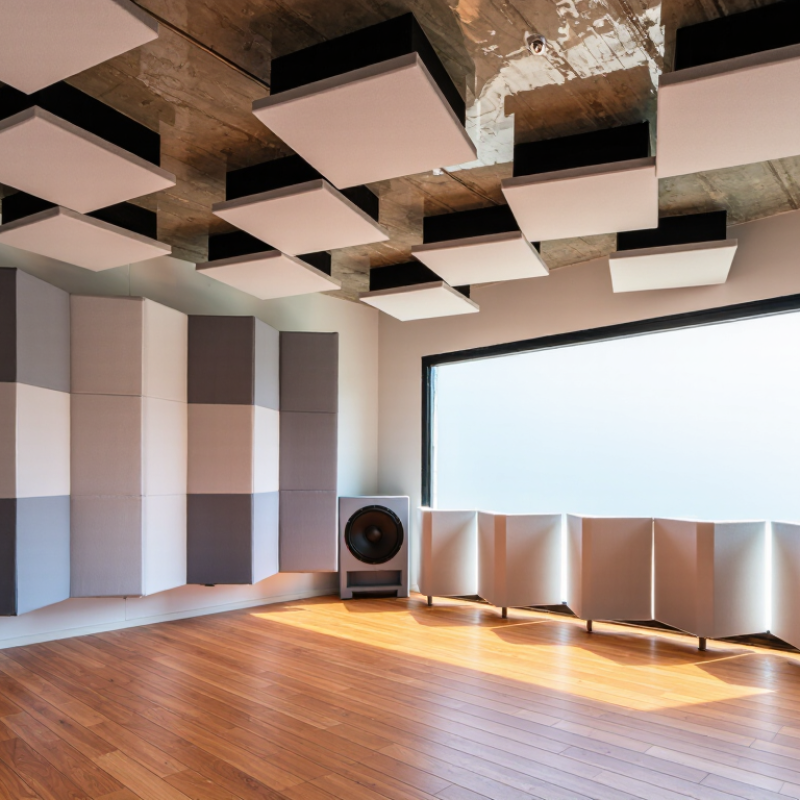
Choosing the best Acoustic Membrane begins with the room, not the product catalogue. A recording studio, conference room, theatre, and industrial space all produce different acoustic problems. Reverberation may linger beneath a concrete ceiling. Speech may disappear near a glass wall. Low frequencies may gather in corners. These details matter.

Dr. Trevor Cox, a leading acoustics professor and author, has often stressed the importance of evidence in acoustic design: “Good acoustic design starts with understanding the room, not simply adding treatment.” That principle should guide every membrane decision. Measure reverberation time, speech intelligibility, frequency response, temperature, and humidity before comparing materials. Then review the membrane’s absorption ratings, thickness, tension, mounting system, durability, and cleaning requirements. Independent laboratory data is valuable, but field performance can differ. Installation changes everything.

Look closely at the space.

A high-performing Acoustic Membrane may fail when stretched incorrectly or installed without an effective air cavity. Consider whether the surface must resist impact, moisture, dust, or frequent maintenance. Check fire-performance documentation and local building requirements through qualified professionals. Do not trust vague claims such as “maximum soundproofing.” Membranes usually improve absorption; they do not automatically block sound between rooms.

Experience also teaches humility. A beautiful sample may perform poorly in a crowded room. A cheaper fabric may become costly after repeated repairs. I have seen projects focus too heavily on laboratory numbers and overlook lighting, access, and installer skill. The best choice balances measurable acoustic performance, visual purpose, lifecycle cost, and realistic site conditions. That balance is not always perfect, but it is defensible.
How to Choose the Best Acoustic Membrane for Your Project?

Define Acoustic Membranes and Their Core Soundproofing Functions

How to Choose the Best Acoustic Membrane for Your Project?

An acoustic membrane is a thin, flexible layer placed inside walls, ceilings, floors, or enclosures. Its core function is vibration control. When sound makes a panel vibrate, the membrane absorbs part of that energy and converts it into minimal heat. This reduces resonance and limits sound transmission between spaces. A membrane is not magic. It cannot replace airtight construction, insulation, or mechanical decoupling.

The European Environment Agency’s Environmental Noise in Europe 2020 report estimates that over 113 million Europeans experience harmful long-term road-traffic noise above 55 dB Lden. The World Health Organization’s 2018 noise guidelines identify 40 dB Lnight as a health-protective nighttime target. These figures show why small gaps and weak joints deserve attention. ISO 10140 and ASTM E90 also demonstrate that laboratory sound insulation results depend on the entire tested assembly, not one material alone. Low frequencies remain especially difficult.

Tips: Choose by tested performance, not thickness alone. Check density, flexibility, fire classification, and compatibility with adhesives. Seal every perimeter joint. A single open gap can weaken the result. In real projects, installers often focus on the membrane and overlook doors, sockets, or ceiling edges. That is where the design may quietly fail.

Assess Your Project’s Acoustic Control and Installation Requirements

Choosing an acoustic membrane starts with the room, not the product catalogue. Measure the noise problem before comparing materials. Is sound entering through a partition, escaping through a ceiling, or echoing inside the room? Each issue needs a different response. Record room dimensions, wall layers, ceiling height, and existing finishes. A membrane may reduce resonance, but it cannot repair every weak junction. That distinction matters.

Assess the required acoustic control in practical terms. For airborne noise, check the target frequency range and expected sound reduction. Low-frequency noise often demands mass, flexibility, and careful separation from rigid surfaces. For reverberation, placement and surface coverage may matter more than thickness alone. Ask whether speech clarity, music balance, privacy, or machinery control is the real goal. Use measured data where possible. Unverified claims create expensive surprises. A small test area can reveal wrinkles, edge leakage, or poor adhesion before full installation.

Installation requirements deserve equal attention. Confirm substrate condition, moisture exposure, temperature range, fire documentation, and repair access. Plan overlaps, seams, penetrations, and perimeter seals before cutting the membrane. Work around ducts and outlets carefully; tiny gaps can weaken the system. Coordinate with electricians and installers early. Do not assume a skilled installer can correct an unsuitable design. Project reviews often show teams focusing on material thickness while ignoring door frames and service openings. The result looks complete, yet sound still travels through the easiest path. Review the plan after installation, because field conditions rarely match drawings perfectly.

How to Choose the Best Acoustic Membrane for Your Project?

Compare the main selection priorities for common project conditions. Use the chart to balance airborne-noise control, low-frequency performance, impact and vibration control, and installation constraints before choosing a membrane system. Final selection should be verified against the required acoustic test ratings, substrate, fire requirements, and available installation space.

Compare Membrane Materials, Thicknesses, Density, and Sound Ratings

How to Choose the Best Acoustic Membrane for Your Project?

Compare Membrane Materials, Thicknesses, Density, and Sound Ratings

Choosing an acoustic membrane starts with the noise problem, not the product label. I first identify whether the project involves voices, machinery, music, or impact noise. Each source travels differently through walls, ceilings, and floors.

Material affects flexibility, durability, and frequency control. A flexible polymer membrane can improve airborne sound insulation when installed continuously. Mineral-based membranes often provide higher mass in thinner layers. Thickness matters, but thicker is not automatically better. A 3-millimeter membrane may outperform a thicker option when it fits tightly between boards. Gaps can weaken the whole assembly.

Density helps create mass, which usually reduces sound transmission. However, excessive density may complicate cutting, lifting, or ceiling installation. On site, I check whether the membrane remains flat around corners and service penetrations. Small openings can become clear paths for sound. They are easy to underestimate.

Sound ratings need careful reading. NRC mainly describes absorption, while STC or similar ratings relate to airborne insulation. These values usually describe a complete tested assembly, not the membrane alone. The same material can perform differently with studs, cavities, screws, and gypsum layers. A neat laboratory number can mislead. I have seen designs fail because installers compressed joints or left narrow gaps near outlets. Review test conditions, thickness, mounting method, and frequency data before choosing. When project conditions differ, allow room for professional acoustic testing rather than trusting one rating.

How to Choose the Best Acoustic Membrane for Your Project? – Compare Membrane Materials, Thicknesses, Density, and Sound Ratings
Membrane Material Typical Thickness Typical Density Approx. Surface Mass Sound-Control Principle Typical Tested Assembly Rating Best-Fit Applications Key Selection Considerations
PVC Mass-Loaded Vinyl (MLV) 1.0 mm 1,700–1,900 kg/m³ 1.7–1.9 kg/m² Adds limp mass to reduce airborne sound transmission, especially when installed continuously without gaps. Approximately STC 40–48* Partition upgrades, ceiling systems, duct enclosures, equipment screens, and floor-ceiling assemblies. Easy to cut and overlap; performance depends strongly on airtight seams, penetrations, and the supporting wall or ceiling.
PVC Mass-Loaded Vinyl (MLV) 2.0 mm 1,700–1,900 kg/m³ 3.4–3.8 kg/m² Provides greater mass per unit area than a 1.0 mm membrane, improving low- and mid-frequency transmission loss. Approximately STC 45–55* High-performance stud walls, home theaters, plant rooms, and commercial partitions. Higher acoustic mass usually improves isolation, but it also increases handling difficulty and structural load.
EPDM Rubber Membrane 1.5–3.0 mm 1,100–1,300 kg/m³ 1.7–3.9 kg/m² Combines moderate mass with flexibility and damping, helping reduce structure-borne vibration and panel resonance. Approximately STC 42–52* Resilient layers, floor systems, mechanical equipment isolation, and vibration-sensitive partitions. Good elasticity and durability; confirm compatibility with adhesives, flooring materials, oils, and temperature conditions.
TPU Acoustic Membrane 1.0–2.0 mm 1,100–1,250 kg/m³ 1.1–2.5 kg/m² Uses flexible mass and material damping to reduce airborne transmission and resonant vibration. Approximately STC 40–50* Lightweight wall linings, modular construction, vehicle interiors, and areas requiring flexible detailing. Typically offers good tear resistance and flexibility; verify fire classification and long-term performance for the project environment.
Reinforced PVC Barrier Membrane 1.5–2.5 mm 1,500–1,700 kg/m³ 2.3–4.3 kg/m² Combines barrier mass with a reinforcing scrim for improved dimensional stability and installation durability. Approximately STC 45–55* Large wall surfaces, ceilings, temporary partitions, and commercial construction where handling strength is important. More resistant to stretching and tearing than unreinforced membranes; check the required overlap and fastening method.
Cork–Rubber Composite Membrane 3.0–8.0 mm 650–850 kg/m³ 2.0–6.8 kg/m² Provides damping and resilient decoupling, limiting the transfer of impact and structure-borne vibration. Approximately STC 40–50*
Impact improvement: project-specific
Floating floors, underlayments, equipment bases, and assemblies where impact noise is a major concern. Useful for vibration control but generally requires a complete floor or resilient assembly to achieve meaningful acoustic results.
Bitumen-Based Acoustic Membrane 2.0–5.0 mm 1,000–1,400 kg/m³ 2.0–7.0 kg/m² Uses high mass and viscoelastic damping to reduce panel vibration and airborne sound transmission. Approximately STC 45–55* Heavy-duty floor, wall, and roof assemblies; industrial enclosures and retrofit applications. Can provide strong damping performance, but temperature sensitivity, odor, flexibility, and fire requirements must be checked.
Technical note: STC values are indicative ranges for complete tested wall, ceiling, floor, or enclosure assemblies that include an acoustic membrane. A membrane does not have a universal standalone STC rating. Actual performance depends on surface mass, cavity depth, insulation, decoupling, airtightness, fasteners, flanking paths, and installation quality. Always use laboratory test data for the exact assembly whenever a specific sound rating is required.

Select the Right Membrane for Walls, Floors, Ceilings, or Equipment

Choosing an acoustic membrane starts with the sound path, not the product label. In practice, walls usually need airborne-noise control, while floors must address footsteps and structural impact. The 2018 World Health Organization Environmental Noise Guidelines recommend keeping nighttime exposure below 40 dB outside bedrooms. That target is demanding. A thin membrane alone cannot solve poor sealing, rigid bridges, or lightweight framing.

For walls, check density, thickness, fire rating, and compatibility with gypsum or masonry. Floors need a membrane with suitable dynamic stiffness, compression resistance, and moisture tolerance. A soft layer may reduce impact noise, yet excessive compression can damage finishes. ISO 10140 laboratory testing helps compare airborne and impact performance, but site results can differ. That gap matters.

Ceilings require attention to the plenum, suspension system, and service penetrations. A membrane under a ceiling board may help, but loose fixtures can still transmit vibration. Equipment needs a different approach: use membranes with verified resistance to heat, oils, movement, and repeated loading. NIOSH identifies 85 dBA over an eight-hour workday as a recommended exposure limit, using a 3 dB exchange rate. For rotating equipment, combine isolation, enclosure treatment, and flexible connections. Do not trust one number. Review tested assemblies, installation details, and measured site conditions before selecting the membrane.

Verify Performance, Compatibility, Safety, and Long-Term Durability

How to Choose the Best Acoustic Membrane for Your Project?

Selecting an acoustic membrane requires more than comparing sound absorption numbers. I begin by checking independent laboratory reports and the exact test method used. A strong result may not reflect performance inside a busy office or a thin partition. Review sound transmission, frequency ranges, thickness, density, and installation conditions. Do not trust one figure.

Compatibility matters just as much. Confirm that the membrane suits the wall, ceiling, flooring, adhesive, and finishing layers. I once approved a material that performed well in testing but reacted poorly with a sealing compound. The installation became slow and expensive. Check temperature limits, moisture exposure, flexibility, and joint details before ordering. Small gaps can reduce real-world performance.

Tips: Request samples and build a small mock-up. Measure sound levels before and after installation. Ask for safety data, emissions information, handling guidance, and fire performance documents. Long-term durability also deserves careful review. Look for aging tests, compression recovery, resistance to humidity, and evidence from similar projects. Project records are useful, but they are not perfect proof. Recheck assumptions. A membrane may remain intact while its adhesive fails, or its acoustic benefit may decline after repeated movement. Reliable selection combines verified data, compatible construction, safe handling, and honest field observation.