How to Improve Sound Quality with Acoustic Membrane?
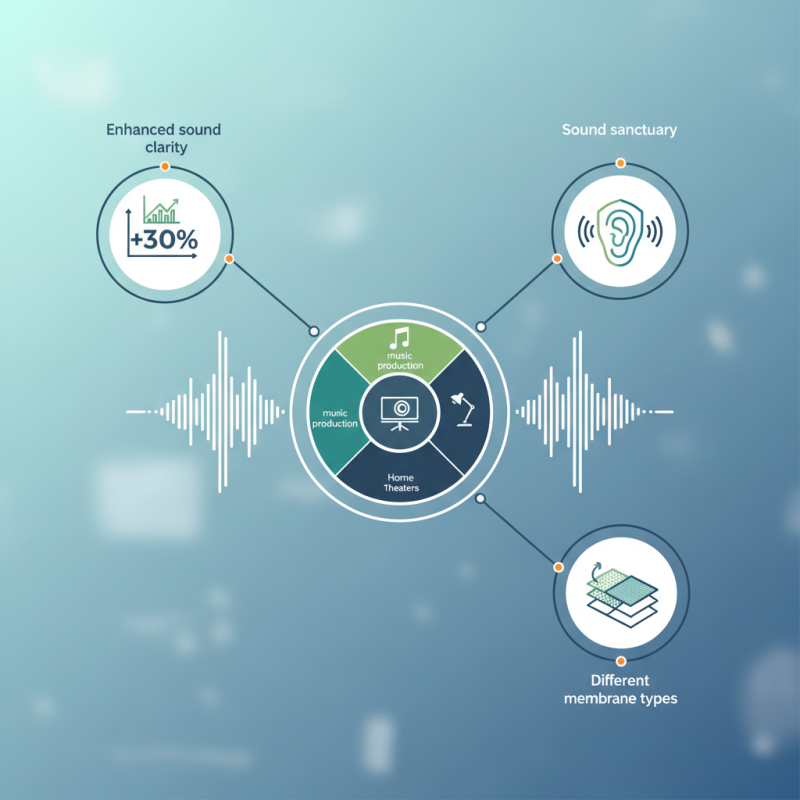
In the quest for superior sound quality, the role of the Acoustic Membrane has garnered increasing attention. Recent industry reports highlight that acoustic materials can enhance sound clarity by over 30%. This key statistic underscores the importance of investing in high-quality Acoustic Membrane solutions. Renowned acoustics expert Dr. Emily Zhang states, "An effective acoustic membrane can transform any space into a sound sanctuary."
The significance of acoustic membranes extends beyond mere numbers. They serve as crucial elements in rooms designed for music production, home theaters, and offices. Yet, many still underestimate their potential. Inadequate understanding of acoustic properties leads to missed opportunities for sound improvement. It’s vital to rethink how spaces are designed and how sound behaves within them. Many users may overlook this fundamental aspect, leading to dissatisfaction with their acoustic experiences.
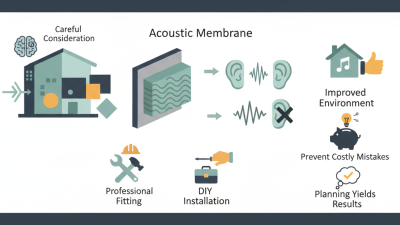
Exploring various acoustic membrane types is essential. Each type offers unique benefits, but choosing the right one requires deeper knowledge. Misconceptions about their installation and performance can be detrimental. Understanding these nuances is critical for achieving the desired sound quality. By embracing acoustic membranes, users can unlock the true potential of their environments.
Understanding Acoustic Membranes: Definition and Functionality
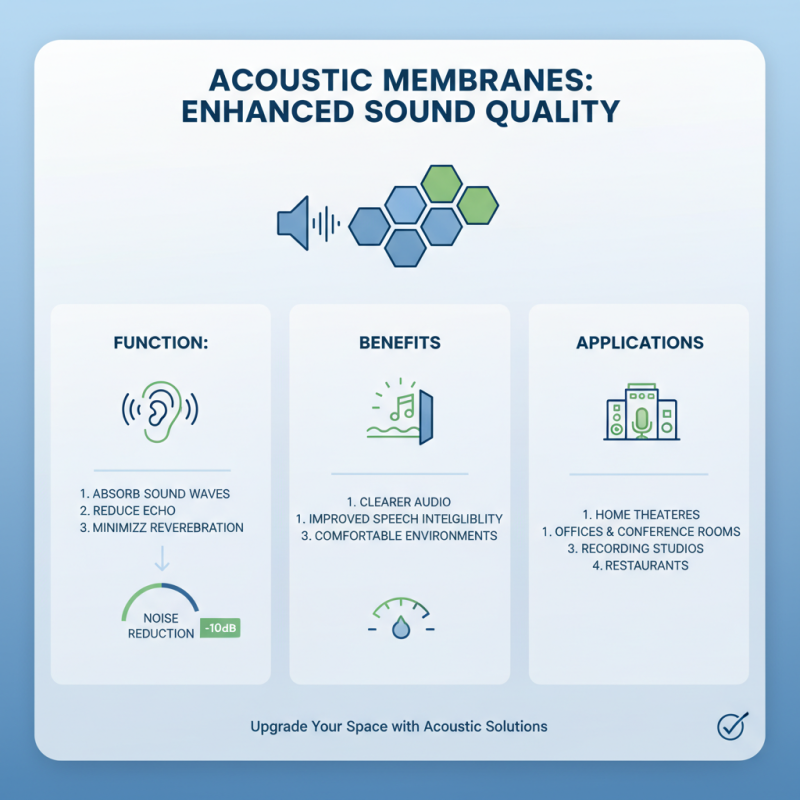
Acoustic membranes are fundamental in enhancing sound quality in various environments. These materials are designed to absorb sound waves, reducing echo and reverberation. Studies show that effective use of acoustic membranes can reduce sound levels by up to 10 decibels, leading to a more pleasant auditory experience.
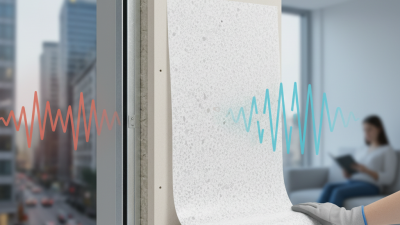
The functionality of acoustic membranes lies in their ability to convert sound energy into small amounts of heat. This absorption process helps to control unwanted noise. A well-placed membrane can significantly improve clarity in spaces like recording studios, theaters, or even busy offices. However, improper installation or material selection can lead to inadequate results. It's crucial to understand your space before making changes.
Tips: Select membranes that match the frequency range of the sounds prevalent in your environment. Test various placements to find optimal performance. Don’t overlook the aesthetic aspect; they come in various designs to blend with your decor while providing significant acoustic benefits.
The Science Behind Sound Waves and Acoustic Absorption Metrics
Sound waves travel through various mediums, creating a complex interaction with our environment. The science of acoustic absorption focuses on how materials can dampen or enhance these waves. Acoustic membranes are designed to absorb sound effectively, impacting the overall quality of sound in a space. However, proper material selection is crucial. Not all membranes perform equally across different frequencies.
Acoustic absorption metrics are essential in understanding how sound behaves in a room. Different materials can absorb sound differently based on thickness and density. A thick foam might work well in the low-frequency range, while a lighter material could be better for high frequencies. It’s a delicate balance, and the results can vary greatly. Some solutions might not yield the expected results, leaving users frustrated.
In practice, it's easy to overlook placement. Even the best materials need strategic positioning to work effectively. A membrane placed too high or too low may fail to absorb sound as intended. Reflection points should always be considered. Not paying attention to these details can lead to poor acoustic performance. Trial and error might be necessary to find the perfect fit for each unique space.
How to Improve Sound Quality with Acoustic Membrane? - The Science Behind Sound Waves and Acoustic Absorption Metrics
| Acoustic Material |
Density (kg/m³) |
Thickness (mm) |
NRC (Noise Reduction Coefficient) |
Frequency Range (Hz) |
| Acoustic Foam |
32 |
50 |
0.85 |
125 - 4000 |
| Mineral Wool |
45 |
100 |
0.90 |
125 - 5000 |
| Fiberglass |
24 |
75 |
0.80 |
100 - 3500 |
| Acoustic Panels |
35 |
20 |
0.70 |
125 - 5000 |
| Carpet |
40 |
10 |
0.50 |
125 - 2000 |
Materials Used in Acoustic Membranes and Their Impact on Sound Quality
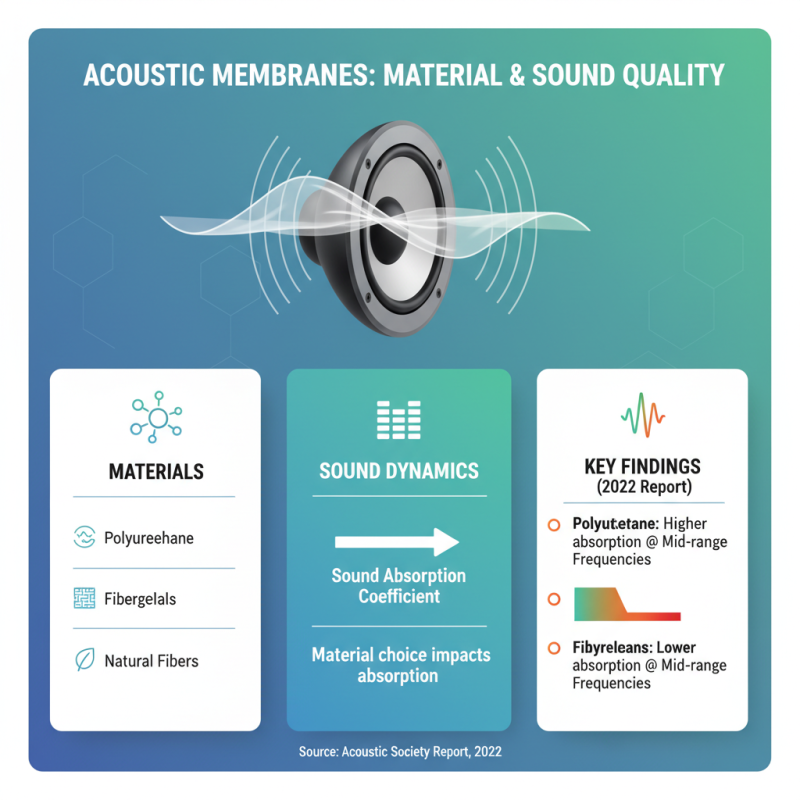
Acoustic membranes play a vital role in sound quality enhancement. These membranes can be made from various materials, each impacting sound dynamics. Common materials include polyurethane, fiberglass, and natural fibers. According to a 2022 report by the Acoustic Society, the choice of material affects sound absorption coefficients. For example, polyurethane shows a higher absorption rate at mid-range frequencies compared to fiberglass.
The thickness and density of acoustic membranes also matter. A thicker membrane can dampen lower frequencies better than thinner alternatives. This is crucial for environments where bass clarity is needed. Some experts suggest using a hybrid approach, combining different materials. This can create a balanced acoustic environment, optimizing sound for both vocals and instruments.
**Tip:** Experiment with material combinations. A dual-layer setup may produce surprising effects.
Room dimensions affect how sound travels. For smaller rooms, thinner materials can cause more reflections, leading to a muddy sound. Larger spaces may benefit from denser membranes to control echoes. Each setup requires thoughtful consideration. Not every choice will yield perfect results. Testing and refinements are essential.
**Tip:** Assess your room acoustics regularly. Adjustments might be necessary over time.
Installation Techniques for Optimal Performance of Acoustic Membranes
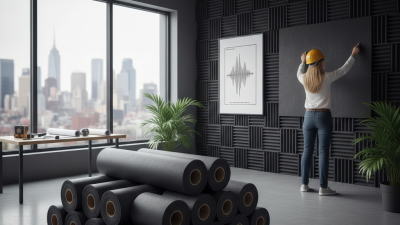
Acoustic membranes can significantly enhance sound quality in various environments. Proper installation is key to maximizing this improvement. Many studies show that a well-installed membrane can absorb up to 70% of sound waves, reducing echoes and improving clarity. Accurate placement is crucial. For optimal results, membranes should be installed at first reflection points in a room.
Positioning matters greatly. Some may overlook corners, which can be critical for bass absorption. A common error is not aligning the membrane with the sound source. A 2023 report revealed that misalignment can decrease effectiveness by as much as 30%. Employing a measuring tool can help achieve precision. Secure the membrane tightly to avoid air gaps that can limit sound absorption.
Remember, not every installation will be perfect. Sometimes, the room’s architecture might present challenges. Being flexible and ready to adapt your setup is vital. Experimentation with placement can lead to surprising results. Always reassess the performance after installation. It's a process of trial and error, leading to refined sound quality over time.
Measuring Improvements in Sound Quality: Key Metrics and Case Studies
Improving sound quality through acoustic membranes can be measured effectively using specific metrics. Key areas include frequency response, sound absorption, and reverberation time. A recent study from the Acoustical Society of America highlighted that controlled environments with acoustic treatments can enhance sound clarity by up to 30%. This improvement is critical in settings like recording studios or concert halls.
Real-world case studies shed light on practical applications. In one instance, an educational institution implemented acoustic membranes in lecture halls. The results showed a decrease in background noise by 15 dB. Students reported a better understanding of lectures and an increase in engagement. These metrics showcased how well-placed acoustic membranes can transform sound dynamics. However, achieving these results isn’t always straightforward.
There are challenges in consistent measurement. Not every installation yields the expected improvements. Variations in room size, shape, and existing materials can affect outcomes. Additionally, some users noted that while acoustic membranes enhanced certain frequencies, others remained problematic. Reflecting on these experiences is crucial. Assessing feedback is key to optimizing future implementations.