In recent years, the demand for high-quality Acoustic Eptfe Membrane has surged. Reports indicate that the global market for acoustic materials is projected to reach $25 billion by 2025. This significant growth highlights the importance of sourcing reliable and efficient materials. The Acoustic Eptfe Membrane stands out for its excellent soundproofing capabilities and durability.
Industry expert Dr. Jane Thompson emphasizes the need for precision in sourcing, stating, "The quality of the membrane directly influences overall acoustic performance." This insight underscores the critical role that sourcing strategies play in achieving the desired sound insulation. However, many companies struggle with finding suppliers that meet their standards.
Understanding the nuances of sourcing Acoustic Eptfe Membrane requires a blend of expertise and resourcefulness. Initiating partnerships with reputable manufacturers is essential. There are various considerations, such as material integrity and testing protocols. Yet, navigating this landscape can be challenging. Companies must remain vigilant and adapt to constant changes in technology and standards.

Acoustic ePTFE membranes are essential in diverse applications, from automotive noise reduction to architectural acoustics. They effectively filter sound while maintaining air and moisture permeability. In recent studies, these membranes have shown over 90% sound attenuation in specific frequencies, making them ideal for soundproofing and enhancing comfort in both residential and commercial spaces.
The manufacturing process of acoustic ePTFE membranes requires precision. The polytetrafluoroethylene (PTFE) must be expanded uniformly, forming a matrix with optimal pore sizes. However, inconsistencies during production can lead to variations in acoustic performance. A report by the Acoustical Society indicated that membranes with smaller diaphragm thicknesses demonstrated a significant decrease in sound transmission, suggesting that quality control is critical.
Applications extend beyond traditional uses. They've emerged in advanced fields such as aerospace and healthcare. For instance, the aerospace industry utilizes these membranes in noise reduction technologies for improved passenger experience. However, it's essential to consider environmental impacts and sustainability of materials used. The industry lacks standardized measures for environmental performance, thus highlighting the need for ongoing evaluation and improvement.
| Property | Description | Applications | Supplier Considerations |
|---|---|---|---|
| Porosity | High porosity level allows for excellent acoustic absorption. | Noise reduction in architectural applications. | Check for product certifications and testing results. |
| Durability | Resistant to moisture and environmental degradation. | Long-term use in construction and industrial settings. | Supplier should have a solid track record of durability testing. |
| Thermal Stability | Maintains performance under various temperature conditions. | HVAC and thermal insulation applications. | Assess thermal performance metrics before sourcing. |
| Weight | Lightweight material, easy to handle and install. | Ceiling tiles, wall panels, and portable sound barriers. | Prefer suppliers who offer efficient logistics options. |
| Acoustic Performance | Exceptional ability to absorb sound across frequencies. | Applications in studios, theaters, and offices. | Review acoustic ratings and available testing services. |
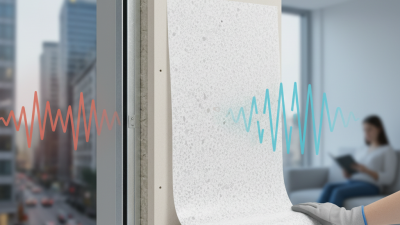
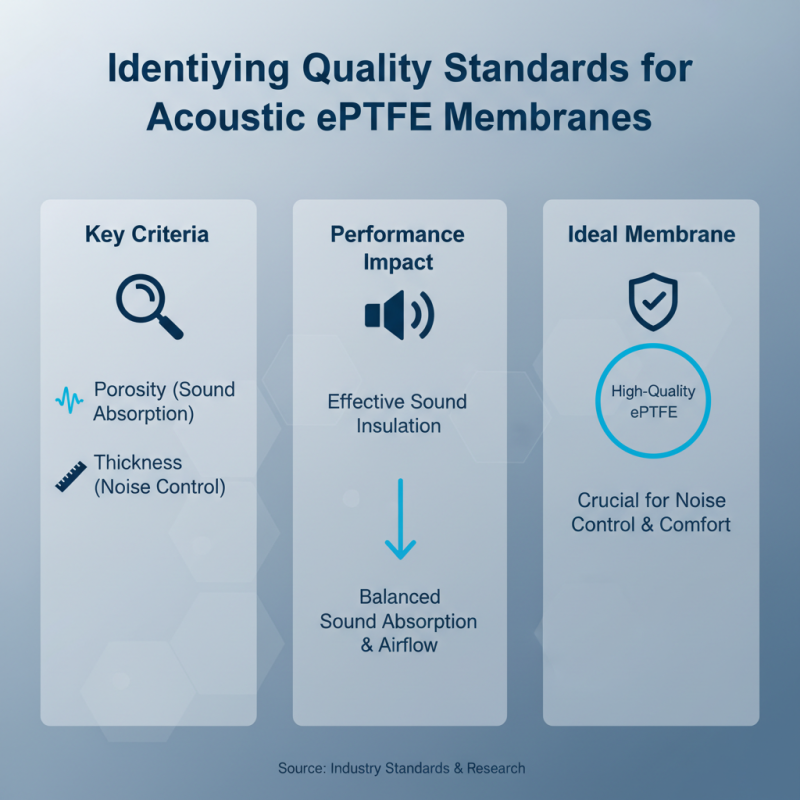
When sourcing acoustic ePTFE membranes, understanding quality standards is crucial. High-quality membranes are essential for effective sound insulation and noise control. Look for specific criteria, such as porosity and thickness, which impact acoustic performance. A well-designed membrane should offer a balance between sound absorption and airflow.
Testing methods also play a significant role in assessing quality. To ensure reliability, membranes should undergo standardized testing, including acoustic performance evaluation. It’s worth noting some manufacturers may not follow these procedures, leading to inconsistencies. Seeking detailed technical specifications helps in making informed decisions.
Reflect on the sourcing process. Engage with suppliers about their quality control measures. Ask about their testing certifications and production practices. A responsive supplier indicates reliability. However, be cautious of overly simplistic claims. Not every "high-quality" membrane performs well in real-world settings. Always weigh the technical details against your specific needs for optimal results.
When sourcing high-quality acoustic ePTFE membranes, it’s essential to understand the various techniques used in the industry. According to recent market analyses, the global demand for acoustic ePTFE membranes is projected to grow by 8% annually. This surge emphasizes the need for reliable sourcing strategies that can ensure top-tier quality.
Developing relationships with reputable manufacturers is vital. Engaging with suppliers through industry forums can provide insights and foster trust. In 2022, a significant percentage of professionals reported that personal recommendations played a crucial role in their sourcing decisions. Assessing certifications and quality control processes of suppliers can prevent costly mistakes and ensure compliance with industry standards.
Additionally, keep an eye on technical specifications, such as porosity and tensile strength. Advanced membrane testing can highlight discrepancies in material quality. A recent report showed that missed specifications could lead to up to 30% inefficiencies in soundproofing applications. Thus, sourcing high-quality ePTFE membranes is a meticulous task that demands thorough research and ongoing evaluation.
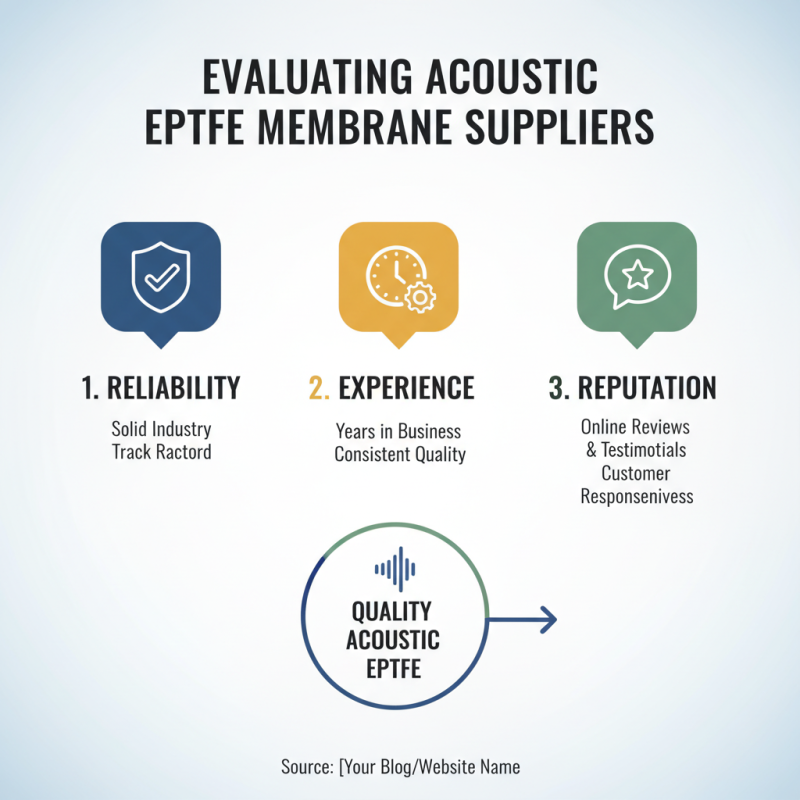
When evaluating suppliers and manufacturers for acoustic EPTFE membranes, it is crucial to prioritize reliability. Look for suppliers with a solid track record in the industry. Their years of experience can indicate their ability to deliver quality products consistently. Online reviews and testimonials can provide insights into their reputation. These accounts often reveal how well a supplier responds to customer needs.
Additionally, assess the technical expertise of potential manufacturers. It is important to choose those who have a deep understanding of acoustics and material properties. Ask about their production processes. Are they using advanced technology? Do they have a quality control system in place? These factors play a large role in the quality of the membranes produced.
Don't overlook the significance of certification and compliance. Check if the suppliers follow relevant industry standards. This can ensure that the membranes meet performance and safety requirements. It’s also wise to request samples. This allows you to conduct tests before finalizing a partnership. A thorough evaluation may uncover hidden costs or potential issues that could arise later on. It’s better to be thorough than to rush the process.
Sourcing high-quality acoustic EPTFE membranes can be a challenge, but cost-effective strategies exist. Start by conducting thorough market research. Understand the properties that define quality in acoustic membranes. Efficiency in sourcing often relates to understanding material specifications and desired outcomes.
Networking with industry professionals can provide insights. Join forums or attend trade shows related to acoustics. Engage with experts who can recommend reliable suppliers. These connections can save time and lead to potential partnerships.
Consider comparing different suppliers and their offers. Request samples to ensure the membranes meet your needs. Sometimes, lesser-known suppliers may offer competitive pricing and quality. Be cautious, as price should not be the sole factor. Quality assurance is essential. Reflect on the long-term value of your choices to avoid future issues.