Choosing the right Adhesive Vent Membrane is not a simple matter of matching pore size to a product label. Real performance depends on pressure changes, moisture exposure, surface energy, adhesive compatibility, and installation quality. A membrane that works well on a clean aluminum housing may fail on textured plastic. Small details matter.
Adhesion scientist Dr. Steven Abbott states, “Adhesion is not a property of a material, but of a system.” That principle should guide every selection decision. The membrane, adhesive, housing, environment, and assembly process must be evaluated together. Check air permeability, water-entry resistance, temperature range, chemical exposure, and bond strength. Also examine the vent’s footprint. A narrow sealing area can create problems during production.
Field experience often reveals what technical sheets miss. Dust on a surface. Uneven pressure during application. A corner lifting after thermal cycling. These details deserve attention. Ask suppliers for test methods, not only performance numbers. Confirm whether results reflect your housing material and expected environment. Laboratory data is useful, but it is not the whole answer.
This guide presents ten practical tips for selecting an Adhesive Vent Membrane with greater confidence. Some recommendations may seem obvious. They are still easy to overlook. A perfect choice on paper can disappoint in real assembly conditions. Careful trials, documented observations, and honest review of failures can lead to a more reliable design.
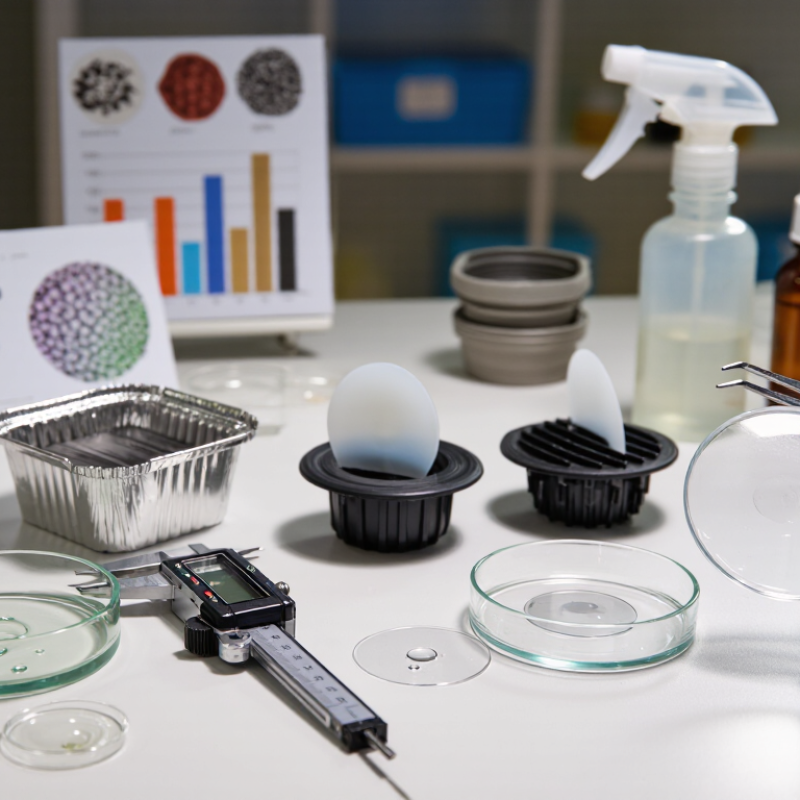
An adhesive vent membrane equalizes pressure inside a sealed enclosure. It allows air exchange while limiting water, dust, and liquid entry. This function protects sensitive parts from pressure stress and moisture buildup. It is not a magic seal. The membrane must match the enclosure’s actual environment.
In field applications, pressure changes can come from heating, cooling, altitude, or daily operation. A small sensor housing may expand air during sunlight exposure. Later, cooling can create negative pressure and pull moisture through weak joints. A suitable membrane reduces this pressure difference without blocking the designed vent path. Hydrophobic materials often help, but water resistance alone is not enough. Airflow, pore structure, adhesive strength, and chemical compatibility also matter.
Check the housing material before choosing the adhesive. Low-energy plastics may need different bonding support than coated metals. Clean the surface carefully, because oil and dust can weaken the bond. Apply the membrane flat, without wrinkles or stretched areas. Leave enough clearance around the vent opening. During testing, inspect pressure equalization, water exposure, temperature cycling, and long-term adhesion. I have seen teams focus on initial bonding and overlook aging. That approach can produce false confidence. Real performance may change after heat, vibration, or cleaning chemicals. Choose based on measured conditions, not a convenient data sheet alone.
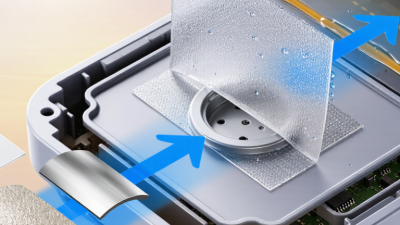
Check gas permeability, water-vapor transmission, pore structure, thickness, adhesive type, surface energy, temperature range, pressure response, chemical resistance, and aging stability. ASTM F1249-23 measures water-vapor transmission at controlled humidity and temperature, commonly 38°C and 90% relative humidity. Use comparable test conditions. Otherwise, the numbers may deceive you.
For outdoor electronics, an IP rating helps define protection limits. Under IEC 60529, IP67 requires temporary immersion up to one meter for 30 minutes. IP68 depends on the manufacturer’s stated conditions.
Choose a membrane with suitable air-flow resistance and hydrophobic performance. Battery enclosures need rapid pressure equalization during heating and cooling cycles.
A 2024 electric-vehicle battery market report from MarketsandMarkets identifies thermal management and safety enclosure design as major development priorities. In practice, adhesive compatibility can decide success.
Surface preparation Clean, low-energy plastic may require surface preparation. I have seen excellent membranes fail after poor bonding. That mistake is easy to repeat.
Test vibration, salt spray, solvents, and repeated temperature swings before approval.
Grand View Research’s 2024 analysis of high-performance membrane materials also highlights durability and application-specific performance as key market requirements. A neat spreadsheet can still miss real-world aging.
Choosing an adhesive vent membrane starts with airflow, not price. A vent must release trapped air during heating and cooling. It should still resist liquid water, dust, and condensation. The 2023 ASHRAE Handbook notes that pressure changes can drive moisture through small enclosure openings. Even a minor pressure imbalance matters.
Check airflow using a defined test method, such as differential-pressure flow testing. Compare results at 10, 50, and 100 pascals. These points reveal whether the membrane works under gentle breathing or rapid thermal cycling. Moisture protection needs separate evidence. ASTM E96 measures water vapor transmission, while ISO 15106 provides additional vapor-permeability methods. Do not treat a high airflow value as proof of reliable moisture resistance.
Pressure equalization also depends on adhesive design. A narrow bond line can restrict the vent path. Uneven application may create hidden leaks. IEC 60529 ingress testing helps assess enclosure protection, but the final assembly must be tested, not only the membrane. In field evaluations, I have seen clean laboratory results fail after dust exposure and repeated temperature changes. That weakness is worth admitting. Ask for aging data, peel-strength results, and post-cycling airflow measurements. A 2024 electronics packaging market report from MarketsandMarkets identifies thermal management and reliability as continuing design priorities, but market forecasts cannot replace enclosure-specific testing. Test the actual housing, vent location, adhesive thickness, and contamination conditions.
Choosing an adhesive vent membrane starts with the bond, not the label. Test peel strength on the actual enclosure material. Surface energy, texture, and molding release agents can change results. ASTM D3330 provides a useful 180-degree peel method, but one laboratory reading is not enough. I would repeat testing after heat, humidity, and aging exposure. A clean lab result can mislead.
Tip 1: Check material compatibility. Compare the membrane adhesive with metals, coated plastics, glass-filled polymers, and powder coatings. Chemical resistance data from the manufacturer should cover oils, cleaning fluids, and expected operating temperatures. The 2024 Global Pressure-Sensitive Adhesives Market report identifies packaging and transportation as major demand sectors, showing how widely these adhesives face varied surfaces and environments. That variety matters.
Tip 2: Match installation conditions to test conditions. The surface should be dry, dust-free, and within the adhesive’s recommended temperature range. Apply firm, even pressure, then allow sufficient dwell time.
Tip 3: Inspect the vent path. A membrane can bond strongly while airflow remains restricted by excess adhesive, paint, or housing geometry. IEC 60529 ingress testing helps verify enclosure protection, while ASTM D1000-style methods can support tape and adhesive comparisons. Do not assume the strongest adhesive is the best choice. It may complicate repair, distort thin walls, or lose performance after thermal cycling. Field trials should include real operators, imperfect surfaces, and realistic assembly speed.
Selecting the right adhesive vent membrane starts with the real enclosure, not a glossy data sheet. A control box on an outdoor pole faces heat, rain, dust, and pressure cycling. Compare membrane thickness, adhesive strength, air permeability, and resistance to oils or cleaning fluids. A membrane that performs well in a dry laboratory may fail after repeated temperature swings. Check peel adhesion after aging, not only before installation. Small details matter, including surface preparation, overlap, and the installer’s pressure roller.
Durability should match the product’s service life. Ask for test methods, exposure conditions, and failure criteria. Vague claims such as “weather resistant” are not enough. Compliance also needs careful reading. Confirm relevant enclosure, electrical safety, chemical, and environmental requirements for the destination market. Request current declarations and traceable test reports. Do not assume one regional approval covers every application. Requirements can change, and technical files may lag behind revisions. That gap deserves attention.
Total product value includes labor, rejects, maintenance, and replacement risk. A lower unit price can become expensive when membranes lift during assembly or clog early. Compare delivered cost per protected enclosure, including dispensing tools, curing time, and inspection. Evaluate supply consistency, storage life, and technical support. One practical scoring sheet can rank durability, compliance confidence, and installation effort. Leave room for uncertainty. No test reproduces every warehouse, coastal site, or cleaning routine. A pilot run on actual housings often reveals problems that a spreadsheet misses.
| No. | Selection Dimension | Indicative Engineering Benchmark | Why It Matters | Recommended Verification | Product-Value Impact |
|---|---|---|---|---|---|
| 1 | Match airflow to the enclosure | Select a membrane with the required air permeability at the specified pressure differential. Common product ranges may span approximately 0.1–20 L/min/cm² at 7 kPa, depending on construction. | Higher airflow can improve pressure equalization, but excessive airflow may reduce resistance to contaminants or liquids. | Compare air-permeability data using the same test pressure, test area, and reporting unit. Confirm the enclosure’s actual pressure-cycling requirement. | Prevents over-specification and reduces the risk of inadequate pressure equalization. |
| 2 | Check liquid-ingress resistance | For demanding outdoor applications, a water-entry-pressure target above 20 kPa is often used as an initial screening value; higher requirements may call for 50–100 kPa or more. | Water-entry performance helps protect electronics and sensors from rain, splash, condensation, and washdown exposure. | Review water-entry-pressure results and test conditions. Remember that an IP rating applies to the complete enclosure assembly, not automatically to the membrane alone. | Reduces field failures, warranty exposure, and the cost of additional protective hardware. |
| 3 | Evaluate adhesive durability | For pressure-sensitive adhesive constructions, an initial 180° peel strength in the approximate range of 1–10 N/25 mm may be encountered, but the required value depends on substrate and application. | The adhesive must remain bonded through handling, thermal cycling, vibration, humidity, and pressure changes. | Request peel, shear, and holding-power data on the actual housing material. Use ASTM D3330 or an equivalent method where appropriate. | Balances secure attachment with assembly efficiency and reduced rework. |
| 4 | Confirm temperature capability | Define the complete operating and storage range. Many industrial designs require approximately −40°C to +85°C, while automotive or high-temperature zones may require operation near +125°C. | Temperature changes can affect adhesive flow, membrane strength, pore structure, and long-term sealing performance. | Test the bonded assembly through thermal cycling, such as IEC 60068-2-14 or an equivalent customer-defined profile. | Improves service life and avoids selecting a low-cost material that requires later redesign. |
| 5 | Assess chemical compatibility | Screen exposure to water, oils, fuels, cleaning agents, plasticizers, coolants, and process chemicals expected during manufacture and use. | Chemicals can swell the adhesive, reduce tack, alter surface energy, or damage the membrane and its protective layer. | Use immersion or splash testing with the actual chemical concentration, temperature, and exposure duration. Inspect peel strength and water-entry performance afterward. | Minimizes unexpected degradation and supports reliable use in harsh environments. |
| 6 | Consider UV and weathering resistance | For exposed applications, specify resistance to UV, heat, humidity, and outdoor weathering. Internal or shaded installations may need a less extensive weathering profile. | UV and moisture can embrittle polymer layers, discolor materials, and reduce adhesive strength over time. | Use accelerated weathering such as ASTM G154 or ISO 4892-3 when relevant, then repeat adhesion and liquid-ingress testing. | Supports longer outdoor service life without unnecessary premium materials for protected locations. |
| 7 | Verify particle and dust protection | Select pore structure and membrane construction based on the required dust, fiber, and particulate exposure. Do not infer particle performance from airflow alone. | A membrane may allow air exchange while limiting the passage of dust and other contaminants that could damage sensitive components. | Review particle-ingress data using a method appropriate to the enclosure design, and validate the complete assembly under its intended orientation. | Reduces contamination-related failures while preserving necessary venting performance. |
| 8 | Check regulatory and material compliance | Confirm applicable requirements such as RoHS Directive 2011/65/EU, REACH Regulation (EC) No. 1907/2006, halogen restrictions, and customer-specific declarations. | Compliance documentation may be required before the part can enter a regulated supply chain or global market. | Request current declarations, material composition information, change-notification policy, and any relevant flammability or conflict-minerals statements. | Reduces approval delays, documentation gaps, and compliance-related redesign costs. |
| 9 | Design for assembly and quality control | Define application temperature, surface cleanliness, dwell time, liner removal method, placement tolerance, and minimum bond area before production release. | Even a high-performance membrane can fail if it is misaligned, contaminated, wrinkled, or applied outside the adhesive’s process window. | Run application trials on production-equivalent housings. Establish visual inspection criteria and, where practical, a leak or pressure-equalization check. | Improves first-pass yield and lowers labor, scrap, and field-service costs. |
| 10 | Compare total product value | Evaluate unit price together with die-cut yield, packaging, tooling, application labor, test requirements, warranty risk, replacement frequency, and supply continuity. | The lowest purchase price may not deliver the lowest total cost if it increases assembly time, rejects, or field failures. | Use a total-cost-of-ownership model and compare equivalent performance, qualification evidence, lead time, minimum order quantity, and change-control practices. | Best basis for final selection |