Choosing the right Acoustic Membrane manufacturer can shape an entire soundproofing project. The material affects vibration control, speech clarity, installation time, and long-term reliability. For global buyers, the decision involves more than comparing product prices. Manufacturing consistency, technical support, export experience, and documented testing deserve equal attention.
This guide introduces seven manufacturers serving international markets and examines their strengths from a buyer’s practical perspective. The review considers membrane composition, thickness tolerance, density, damping performance, and compatibility with walls, ceilings, floors, and machinery enclosures. It also looks at factory capacity, quality-control procedures, certifications, packaging, minimum order quantities, and communication during specification changes. A dependable supplier should explain performance data clearly, not hide behind broad marketing claims.
Details matter.
A membrane that appears suitable on paper may perform differently after installation. Storage temperature, adhesive selection, surface preparation, and overlapping joints can influence the final result. Buyers should request current technical datasheets, test reports, samples, and written warranty conditions before placing large orders. Rankings are never completely universal. A manufacturer serving automotive plants may not suit a residential renovation project, while a smaller specialist may provide stronger customization.
The companies discussed here were selected using publicly available information and practical purchasing considerations. However, product ranges and certifications can change over time. Independent verification remains essential. This approach aims to give architects, contractors, distributors, and procurement teams a clearer starting point for responsible global sourcing.
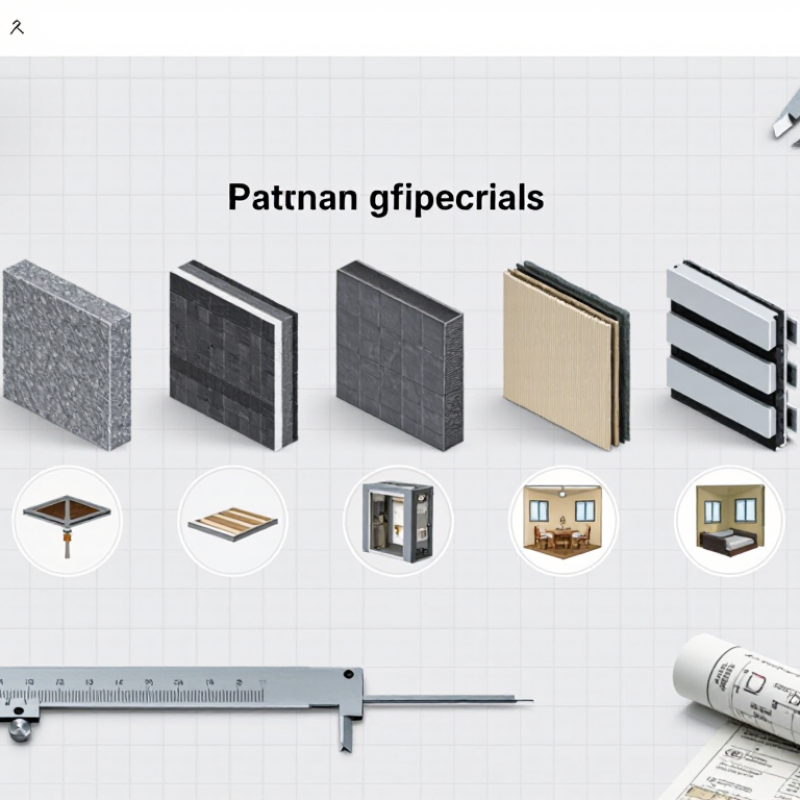
Acoustic membranes are thin, flexible barriers designed to control sound transmission. They do not absorb sound like porous foam. Instead, they add mass, interrupt vibration, and close air paths. In walls, floors, or ceilings, the membrane may sit between rigid boards or beneath flooring. Its performance depends on mass, stiffness, thickness, and installation quality. The European Environment Agency’s Environmental Noise in Europe 2020 report estimated that at least 113 million Europeans experience road traffic noise above 55 dB Lden. Thin barriers therefore have practical value in dense buildings. Thin does not mean universally effective.
When sound strikes a membrane, part of its energy creates controlled bending movement. A heavier layer usually improves airborne sound reduction across many mid-frequency ranges. However, resonance can weaken performance at specific low frequencies. Designers often combine membranes with cavities, resilient channels, and porous insulation. ASTM E90 and ISO 10140 test complete building assemblies, not isolated sheets. This distinction matters. Small gaps around sockets, pipes, and door frames can dominate the final result. Real rooms are messier.
For global buyers, frequency-band results matter more than one impressive rating. Ask for tested assembly data, fire classification, aging evidence, and installation details. The World Health Organization’s 2018 guidelines recommend keeping night-time road noise below 45 dB Lnight outdoors. I would treat any single-number claim cautiously. A membrane can perform well in a laboratory, yet disappoint after poor sealing or incorrect placement. The model is not perfect.
| Reference Category | Typical Membrane Material | Typical Thickness | Typical Surface Mass | How It Works | Common Applications | Key Buying Criteria |
|---|---|---|---|---|---|---|
| Heavy Limp Mass Membrane | Flexible PVC or polymer-based sheet | 1.5–6.0 mm | 3–10 kg/m² | Adds mass to a wall, ceiling, floor, or enclosure and reduces airborne sound transmission through the mass-law effect. | Partition upgrades, machinery enclosures, duct and pipe wrapping, vehicle interiors | Mass per area, flexibility, tear strength, odor, temperature resistance, and fire performance |
| Mass-Loaded Vinyl-Type Membrane | Mineral-filled PVC or similar viscoelastic polymer | 1.0–3.0 mm | 2–6 kg/m² | Provides high mass in a relatively thin, flexible layer; it is often installed between or over building layers to improve sound isolation. | Drywall systems, suspended ceilings, raised floors, studios, and commercial interiors | Declared surface density, low-temperature flexibility, dimensional stability, and tested sound-transmission results |
| Polyurethane Viscoelastic Membrane | Flexible polyurethane-based viscoelastic compound | 1.0–5.0 mm | 1–7 kg/m² | Converts a portion of structure-borne vibration energy into low-level heat through internal damping. | Metal panels, equipment housings, elevators, HVAC systems, and lightweight structures | Loss factor, service-temperature range, adhesion, creep resistance, and compatibility with substrates |
| EPDM or Synthetic-Rubber Membrane | EPDM, butyl rubber, or other synthetic elastomer | 1.0–4.0 mm | 1.2–6.0 kg/m² | Combines flexible mass with elastic damping, helping reduce vibration transfer across joints and panels. | Automotive cabins, industrial equipment, building services, and acoustic barriers | Aging resistance, oil and chemical resistance, elongation, compression behavior, and acoustic test data |
| Perforated Acoustic Membrane | Microperforated polymer film or thin metal sheet | 0.1–1.0 mm | 0.1–2.0 kg/m² | Uses viscous and thermal losses in small perforations to absorb sound without conventional fibrous material. | Ceilings, wall panels, cleanrooms, moisture-sensitive interiors, and architectural acoustic systems | Perforation diameter, open area ratio, cavity depth, airflow resistance, cleanability, and absorption coefficient |
| Breathable Acoustic Underlay Membrane | Polyolefin, polyester, or composite polymer membrane | 1.5–10.0 mm | 0.3–3.0 kg/m² | Separates structural layers and reduces impact noise by adding resilient decoupling and controlled damping. | Floating floors, wood flooring, laminate flooring, wall systems, and roof assemblies | Impact sound rating, compressive strength, moisture vapor transmission, thickness recovery, and installation method |
| Fire-Resistant Acoustic Membrane | Halogen-free polymer, mineral-filled elastomer, or treated composite | 1.0–5.0 mm | 1.5–8.0 kg/m² | Provides acoustic mass or damping while limiting flame spread and smoke generation when tested as part of a specified assembly. | Public buildings, transportation projects, marine interiors, data centers, and industrial facilities | Applicable fire standard, smoke rating, toxicity requirements, surface mass, installation details, and certified assembly test results |
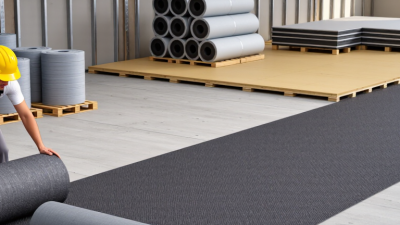
Choosing among the 7 best acoustic membrane manufacturers requires more than comparing catalog prices. Global buyers should verify material composition, thickness tolerance, airflow resistance, and sound absorption data. Ask for independent laboratory reports, not only supplier brochures. Test methods must match the intended market and project type.
A reliable manufacturer explains performance across frequencies, temperature ranges, and humidity levels. For example, a membrane used behind wall panels may need stable results near 125 Hz, not just impressive mid-frequency ratings. Confirm fire classification, VOC data, and installation limits before approval. Request production samples from different batches. Small differences in density can affect cutting, bonding, and final acoustic performance.
Factory audits can reveal useful details. Check calibration records, incoming-material controls, storage conditions, and packaging quality. A crushed roll may arrive legally and still perform poorly. Review the supplier’s export experience, minimum order quantity, lead times, and replacement policy. Clear technical drawings and responsive engineering support also matter during installation. A low price can look attractive, but hidden testing and freight costs may change the decision. One weakness in many evaluations is overtrusting certificates. They confirm a test result, not every future batch. Build a simple scorecard, keep written evidence, and reassess suppliers when specifications change.
The seven leading acoustic membrane manufacturers serve different performance needs. The strongest candidates usually specialize in polymer sheets, mass-loaded vinyl, mineral composites, or multilayer barrier systems. Their products should show tested sound transmission loss, thickness tolerance, and stable performance after installation. A datasheet alone is not enough.
Grand View Research reported that the global acoustic insulation market exceeded USD 15 billion in 2023, with continued growth expected through 2030. This demand reflects stricter building comfort requirements and more urban noise. MarketsandMarkets also identifies transportation, construction, and industrial facilities as major application sectors. For buyers, the best manufacturer is not always the largest exporter. Local technical support can prevent costly fitting errors.
A practical shortlist should include seven manufacturer profiles: high-density barrier producers, flexible polymer specialists, recycled-content suppliers, fire-rated membrane makers, vibration-control experts, custom laminators, and global fabricators with laboratory certification. Ask for ISO 10140 or ASTM E90 test evidence, installation drawings, and batch-control records. Check performance at the frequencies your project actually produces. Low-frequency noise is often overlooked.
Field inspections reveal a common problem: membranes are cut too short around penetrations. Small gaps matter. Another issue is confusing sound absorption with sound blocking. They are different functions. A perfect ranking is impossible because project conditions change. I would revise any shortlist after reviewing fire ratings, climate exposure, warranty terms, and measured data from independent laboratories.
Acoustic wavelength reference across seven standard octave-band frequencies used in sound insulation testing.
The chart uses standard octave-band center frequencies from 125 Hz to 8,000 Hz. Wavelengths are calculated using the approximate speed of sound in air at 20°C, 343 m/s. These neutral engineering references can help global buyers compare acoustic membrane specifications without displaying company or brand data.
Comparing seven acoustic membrane manufacturers requires more than reading decibel claims. Performance depends on frequency, installation, and room volume. A membrane rated at 500 Hz may perform differently near 125 Hz. That difference matters in studios, machinery rooms, and open offices. I check laboratory data, thickness, surface density, fire documentation, and installation tolerances before recommending a supplier. Small gaps can weaken a carefully designed barrier.
Materials create different strengths. Mass-loaded vinyl offers strong airborne-noise reduction in thin assemblies. Thermoplastic films can provide flexibility around ducts and curved panels. Reinforced composite membranes usually resist tearing during transport and repeated fitting. Recycled PET systems are lighter and easier to handle, but they may need additional mass for low-frequency control. Mineral-filled layers improve density, although they can increase weight and installation effort. No material wins everywhere.
Applications should guide the comparison. Thin flexible membranes suit partition upgrades and ceiling systems. Dense layers work better behind drywall, under floors, or around equipment enclosures. Moisture-resistant membranes are safer for plant rooms, but chemical compatibility still needs checking. I have seen projects select impressive test results, then struggle with seams and fasteners. That is an easy mistake. Ask manufacturers for tested assembly data, not isolated product numbers. Review aging, temperature limits, recyclability, and local compliance records. A supplier with clear technical drawings and responsive engineering support is often more reliable than one offering the highest headline rating.
Selecting an acoustic membrane supplier requires more than comparing prices. The manufacturer should provide tested results for sound reduction, thickness, density, and installation conditions. The European Environment Agency reports that over 20% of Europeans experience harmful transport noise levels. This highlights the need for dependable acoustic materials in housing, offices, and industrial spaces. Ask for laboratory reports based on recognized standards, such as ISO 10140 or ASTM E90. Request the complete test assembly, not only a single performance number.
Material consistency is equally important. Check production tolerances, roll dimensions, moisture resistance, fire classification, and volatile organic compound documentation. MarketsandMarkets has reported continued growth in the global acoustic insulation market, driven by stricter building requirements and urban construction. Growth alone proves little.
Ask whether the supplier can maintain the same mass per square meter across repeated batches. Request samples from current production, then inspect flexibility, surface finish, and odor.
Supply reliability can decide a project. Review monthly capacity, minimum order quantities, packaging, export experience, and technical response times. A capable manufacturer should explain how its membrane performs behind drywall, under flooring, or inside machinery enclosures. Site results may differ from laboratory data. That uncomfortable gap matters. I would also ask for installation guidance and previous project references, while recognizing that references can be selective. The strongest suppliers welcome independent verification, disclose limitations, and correct unclear data instead of hiding behind impressive charts.