Street noise can turn a bedroom into a place where sleep feels just out of reach. Closing the window may soften traffic, but it can also leave a room stuffy. An Acoustic Vent is designed to allow fresh air through while reducing some incoming noise. The result depends on its design, installation, and the sounds outside.
This guide looks at seven acoustic vents for different rooms and practical needs. It considers noise-reduction claims alongside airflow, size, materials, maintenance, and installation requirements. These details matter: a vent that suits a quiet office may not perform well beside a busy road. Low traffic hum and sharp voices can also travel differently, so no single product should be expected to silence every sound.
Small details count. Check the stated test conditions, not just a headline rating. Look for clear specifications and instructions, and consider whether the vent fits your wall or window without obstructing airflow. A poorly fitted unit may disappoint. And advertised performance can be hard to compare when manufacturers use different methods. The options below offer a useful starting point, not a guarantee of silence; room layout, sealing, and outside noise still matter. If possible, compare verified product data with your room’s needs before choosing. A little uncertainty remains. That is worth acknowledging.
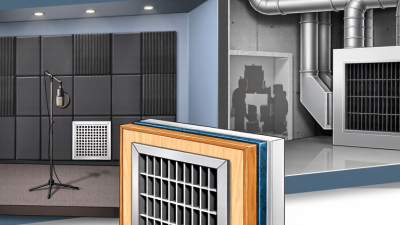
Acoustic vents reduce noise by allowing air through while making sound take a less direct route. Inside, angled baffles, narrow channels, or absorbent linings interrupt sound waves. Some energy is absorbed as sound moves along these surfaces; some is reflected back into the passage.
The result is lower noise transmission, not silence. Sound still travels. Low-frequency noise, such as a steady rumble, can be harder to control than sharper sounds. A vent’s performance depends on its design and the frequencies causing the disturbance.
Airflow matters, too. A vent that blocks too much air may make a room stuffy, while a large, straight opening can pass more noise. Check product test data for both sound reduction and airflow, and compare measurements taken under similar conditions. Installation can change the result: gaps around the frame may create an easy path for sound.
A detail that is easy to underestimate is the room itself; doors, windows, and thin walls can remain weak points. Even a well-chosen vent cannot correct every route.
Tips
Measure the opening before choosing a vent. Keep its air path clear of dust and furniture. Seal perimeter gaps carefully, but don’t obstruct the passage. If noise remains, identify whether it comes through the vent or another surface before replacing anything.

Evaluating Noise Control, Airflow, and Vent Design
An acoustic vent must reduce sound without starving a room of fresh air. That balance depends on its internal path, free area, and pressure drop—not just the thickness of its lining. A deep, lined baffle can interrupt direct sound, while tight bends may also restrict airflow. Check test data for both acoustic performance and airflow at the intended operating rate. A quiet lab result alone can be misleading.
ASHRAE Standard 62.2-2022 calculates a baseline whole-home ventilation rate using floor area and bedroom count: 0.03 cfm per square foot, plus 7.5 cfm for each bedroom plus one. This is a design reference, not a guarantee that any particular vent will deliver enough air. Compare a vent’s tested airflow and pressure drop with the system’s fan capacity. WHO’s 2009 Night Noise Guidelines recommend indoor bedroom noise below 30 dB(A) for good sleep. That target covers room noise overall, not just sound passing through a vent.
Look for independent test results, stated measurement methods, and clear installation limits. Also inspect the physical design: a removable core helps cleaning, and a weather-resistant grille matters on exposed walls. Small details count. A poorly sealed edge can leave a sound path around an otherwise effective baffle. Ratings are useful, but real rooms differ; duct length, fan speed, and installation can change the result. I would treat any single-number noise claim with caution.
Seven Acoustic Vent Options for Different Spaces
Acoustic vents must reduce noise without blocking needed airflow. The World Health Organization’s 2018 Environmental Noise Guidelines for the European Region recommend road-traffic exposure below 53 dB Lden and 45 dB Lnight. These are environmental targets, not vent ratings, but they show why bedrooms facing busy roads need careful attention. Small details matter. Compare tested sound-reduction ratings and required airflow, not product descriptions alone.
For bedrooms, consider acoustic trickle vents that fit window frames. Street-facing living rooms may benefit from wall-mounted attenuating vents with lined, baffled passages. Acoustic window vents suit retrofit projects where replacing windows is impractical. For studios, ducted acoustic attenuators can reduce sound travelling through mechanical ventilation. Offices often use ceiling or plenum vents to distribute air while limiting speech transfer. Door transfer grilles can help move air between rooms, though they offer less privacy. Weather-resistant acoustic louvres suit exterior walls exposed to rain and traffic.
Match the vent to the room, wall construction, and ventilation rate. Ask for independent test data, including the sound-reduction rating and test conditions; figures from different methods may not be comparable. Measure before buying. Even a strong-rated vent can underperform if gaps around its frame leak sound. A common compromise is choosing a compact unit that cannot deliver enough airflow, so check both requirements with a qualified building professional.
Standard octave-band center frequencies used when assessing noise around ventilation openings
Seven options: baffled wall vents, lined duct vents, acoustic louvres, window trickle vents, attenuated door transfer grilles, roof ventilators with silencers, and plenum attenuator boxes.
The bars show standard octave-band center frequencies, not noise-reduction ratings. Actual attenuation depends on the vent design, dimensions, airflow, installation, and test conditions; compare measured performance across the frequency bands for your application.
Acoustic vents balance sound control with fresh-air flow; their material and test rating matter equally. Mineral-wool or glass-fibre cores absorb sound inside lined passages, while metal blades create a durable, washable route but may offer less absorption alone. Foam-lined designs can be compact, though moisture exposure and cleaning needs deserve attention. No material wins in every room.
Compare octave-band insertion-loss figures, not one headline decibel rating. ISO 7235:2003 specifies laboratory measurements for ducted silencers, including insertion loss, airflow-generated noise, and total pressure loss. ASTM E477-20 also covers acoustic and airflow testing of duct silencers. These test reports help reveal whether a vent reduces speech frequencies yet passes higher-pitched fan noise. A high rating can still disappoint if the unit is undersized or airflow raises pressure and noise.
Tips: Match the test data to your fan’s airflow and duct size. Check the required wall depth, service access, and direction of airflow before buying. Keep the path clear of insulation and debris. I’ve seen installation details matter more than expected; that is an easy point to overlook. Use a qualified installer when cutting into a wall or ceiling.
Choosing and Maintaining the Right Acoustic Vent
A good acoustic vent balances noise control with the airflow a room needs. Check its rated sound reduction and airflow capacity, not appearance alone. A vent that reduces noise effectively may also restrict ventilation if it is undersized. Match the unit to the room, duct size, and expected air volume. In practice, bends and openings around the duct can let sound leak through, weakening the result. Even a carefully chosen vent cannot fix every path.
Tips: Measure the opening before ordering. Check the vent’s airflow and acoustic ratings together. Keep furniture and curtains clear of the grille.
Maintenance helps preserve performance. Dust on the grille or inside the duct can reduce airflow, so inspect both periodically. Follow the manufacturer’s cleaning guidance, and avoid pushing debris deeper into the passage. Look for loose fixings, damaged seals, or signs of moisture. These small faults are easy to overlook. If noise remains intrusive, check for gaps around the installation before replacing the vent. I would not assume the vent itself is always the problem; the room’s other openings may matter too.
| Vent type | How it reduces noise | Typical application | Airflow and installation notes | Maintenance | Best suited for |
|---|---|---|---|---|---|
| Acoustic louvre | Angled blades and sound-absorbing linings interrupt direct sound paths while allowing air to pass. | External air openings in plant rooms, commercial buildings, and noise-sensitive façades. | Requires adequate free area and pressure allowance; check weather protection, drainage, and tested acoustic performance for the specified airflow. | Inspect blades and screens; remove leaves, dust, and other obstructions. Check for water ingress and damaged lining. | Large openings where weather-resistant ventilation and noise control are both needed. |
| Duct silencer (attenuator) | Absorptive material inside a duct attenuates sound travelling through the ventilation system. | Supply or extract ducts serving fans, air-handling units, and occupied spaces. | Installed in-line; select for duct size, airflow, pressure drop, and the sound frequencies to be controlled. Allow space for access where needed. | Check accessible sections for dust buildup, loose components, moisture, and deterioration of the lining. | Duct-borne fan or plant noise in mechanical ventilation systems. |
| Baffled wall vent | Internal baffles create a non-straight sound path; absorptive surfaces can further reduce sound transmission. | Passive ventilation through an external wall in homes, studios, and small rooms. | Available free area and pressure resistance affect ventilation. Confirm compatibility with the wall construction and required air-change rate. | Clean the grille and accessible baffles; keep the opening clear and check seals around the wall penetration. | Rooms needing passive air transfer through a wall without a direct line of sight for sound. |
| Acoustic air-transfer grille | A lined, baffled passage allows air to move between rooms while limiting direct sound transfer. | Internal partitions, doors, and corridors where air needs to move between spaces. | Does not itself provide outdoor ventilation. Size for the required transfer airflow and check that the partition opening does not compromise fire or smoke separation. | Vacuum or wipe accessible grilles; inspect for dust blockage and damage to the internal lining. | Inter-room air transfer where privacy and reduced speech transmission matter. |
| Acoustic trickle vent | A compact, baffled vent uses an indirect air path to reduce sound entering through a window or frame opening. | Background ventilation in window frames or above-window locations in dwellings. | Provides limited background airflow rather than high-volume ventilation; check the required ventilation strategy and compatibility with the window assembly. | Keep the opening and insect screen clear; check the control flap and seals operate correctly. | Bedrooms and living areas requiring background ventilation through a façade opening. |
| Acoustic through-wall ventilator | A deeper internal passage, often with bends and absorptive lining, reduces direct sound transmission through the wall. | Direct façade ventilation for individual rooms, including retrofit projects. | Check wall depth, duct diameter, airflow resistance, condensation risk, and weather sealing; some systems require a fan to achieve the design airflow. | Clean the internal and external grilles; inspect the sleeve, seals, and any fan or filter in accordance with the installation instructions. | Room-by-room ventilation where a direct wall opening would otherwise admit excessive outdoor noise. |
| Acoustic roof vent | A baffled or lined roof-level air path reduces direct sound transmission while supporting roof-space or building ventilation. | Roof-mounted ventilation openings in commercial buildings and selected residential applications. | Select for the ventilation duty, roof construction, wind exposure, and weathering requirements; ensure the roof penetration is properly flashed and sealed. | Inspect the weatherproofing, grille, and internal baffles; clear debris and check for corrosion or water entry. | Projects where ventilation must be routed through the roof rather than a wall or window. |
Selection note: Acoustic performance and airflow depend on the complete installation, including opening size, duct length, bends, seals, and operating conditions. Compare independently tested acoustic data at the required airflow, and confirm that the vent does not conflict with fire-safety or building-ventilation requirements.