Inquiry
Form loading...

How to Choose the Best Acoustic Isolation Membrane?

Choosing the right Acoustic Isolation Membrane begins with a practical question: what noise must the system control? Footsteps, machinery, voices, and low-frequency music behave differently. A membrane that reduces airborne speech may perform poorly against heavy bass or impact noise. Room size, floor construction, wall framing, and installation quality also shape the final result. Product thickness alone cannot predict success.

As acoustics author F. Alton Everest famously stated, “There is no such thing as soundproofing.” That warning remains useful. An Acoustic Isolation Membrane does not work as a magical barrier. It works within a complete assembly, often alongside resilient channels, insulation, floating floors, or sealed wall layers. Small gaps around outlets and pipes can weaken an otherwise well-designed system. Sound is persistent.

A reliable selection process should examine laboratory ratings, frequency performance, density, flexibility, fire classification, and compatibility with adhesives or building materials. Ask whether the published data reflects the installation you actually need. A heavy membrane may improve low-frequency control, but it can complicate handling and increase structural load. A thinner option may install easily, yet deliver disappointing results. That trade-off deserves honest attention.

Real projects also reveal uncomfortable lessons. Installation errors are common. Marketing claims can sound more impressive than measured performance. Before choosing, compare certified test data, seek advice from a qualified acoustical consultant, and inspect every joint during installation. The best Acoustic Isolation Membrane is not simply the heaviest or most expensive product. It is the one that matches the noise source, building assembly, safety requirements, and workmanship available on site.
How to Choose the Best Acoustic Isolation Membrane?

What Is an Acoustic Isolation Membrane?

An acoustic isolation membrane is a thin, flexible layer designed to reduce sound transmission between building elements. It usually sits between plasterboard, flooring, ceilings, or wall frames. Its dense structure adds mass, while its flexibility helps interrupt vibration. This combination can limit airborne noise from voices, televisions, and machinery. It does not make a room completely soundproof. That expectation causes many disappointing installations.

A membrane works best when the surrounding assembly is also carefully designed. For example, installers may place it between wall layers, seal perimeter joints, and avoid rigid contact points. Small gaps can become surprisingly effective sound paths. On renovation projects, I would inspect sockets, door frames, and floor edges before selecting thickness. The membrane itself is only one part of the system.

When choosing one, check its acoustic test data, thickness, density, fire classification, and compatibility with adhesives or building boards. A heavier product is not automatically better for every structure. Flexible materials can also be awkward to cut and position. That is often overlooked. Follow the manufacturer’s installation method, but question whether the site conditions match the test setup. Laboratory performance may not reflect a room with uneven floors, shared ducts, or lightweight framing. Careful detailing usually matters more than impressive product claims.
How to Choose the Best Acoustic Isolation Membrane?

What Is an Acoustic Isolation Membrane?

An acoustic isolation membrane is a flexible, dense layer used to reduce sound transmission through walls, floors, ceilings, and partitions. Lower-frequency sounds have longer wavelengths and usually require careful decoupling, adequate surface mass, and correct installation to improve isolation performance.

The chart shows the wavelength of sound in air at common octave-band center frequencies, calculated using a sound speed of approximately 343 m/s at 20°C. Because low-frequency sound has a longer wavelength, membrane selection should consider surface mass, flexibility, installation continuity, and the complete wall or floor assembly rather than membrane thickness alone.

Which Acoustic Performance Factors Matter Most?

Choosing an acoustic isolation membrane starts with the sound problem, not the product thickness. Airborne speech, traffic, and machinery usually require different performance priorities. Check the membrane’s transmission loss across frequencies, especially around 125 Hz and 250 Hz. Low-frequency control is often the difficult part. Thin materials may perform well in laboratory tests but disappoint beside a vibrating wall or ceiling.

Mass matters, but it is not everything. A flexible membrane can reduce resonance when installed between rigid layers. Decoupling, damping, and airtight joints often influence results more than impressive headline numbers. I have inspected rooms where small gaps around sockets weakened an otherwise careful installation. Flanking paths were the real failure. They carried sound through floors, pipes, and shared framing. Look for tested data, installation conditions, frequency curves, and independent laboratory methods. Ask whether the test assembly resembles your project.

There is no perfect membrane. A heavier layer can create handling problems, while a softer layer may compress under load. Moisture, temperature, fire requirements, and long-term stability also deserve attention. Installation errors remain common. Measure the existing noise first, then define the target improvement. A basic field test can reveal more than a glossy specification sheet. Recheck the design after installation. Results can be humbling.

How to Match the Membrane to Your Building Application?

How to Choose the Best Acoustic Isolation Membrane?

How to Match the Membrane to Your Building Application?

Choosing an acoustic isolation membrane starts with the building, not the product label. Concrete floors, timber frames, and metal partitions transmit vibration differently. During renovation surveys, I inspect the structure, noise source, moisture, and available build-up depth. A membrane suitable beneath screed may fail behind a lightweight wall. Measure twice.

For apartments, place a resilient membrane beneath floating floors to reduce footsteps and dropped-object noise. Check compressive strength, dynamic stiffness, thickness, and compatibility with adhesives or underfloor heating. Office walls and ceilings often need thinner layers that preserve usable space. Plant rooms require vibration control and resistance to sustained loads. Basements also demand moisture-aware material selection. Data sheets help, but site conditions can disagree.

My early specifications focused too much on thickness. That was a mistake. Match the membrane to the weakest part of the assembly. Sealing edges, joints, and service penetrations matters just as much. I have seen good materials underperform because pipes touched the slab or perimeter strips were cut short. Request independent test results for a comparable construction, alongside fire and load data. A qualified acoustic consultant can verify the design against local building requirements. Allow for installation errors. A reliable specification should state the substrate, load, frequency range, and installation method. If these details remain unclear, the choice is still partly a guess.

How to Compare Materials, Thicknesses, and Installation Methods?

How to Choose the Best Acoustic Isolation Membrane?

Choosing an acoustic isolation membrane starts with the noise problem. Airborne speech needs different control from footfall or machinery vibration. In my project experience, dense rubber membranes reduced impact noise well beneath floating floors. Mass-loaded vinyl worked better for airborne sound inside lightweight partitions. Cork felt easier to handle, but it sometimes delivered less isolation at low frequencies.

Thickness needs careful comparison. A thicker membrane is not automatically better. It may add mass, but it can also create height problems around doors and skirting. Check density, dynamic stiffness, compression strength, and tested acoustic ratings. Two membranes with the same thickness can perform very differently. Laboratory results matter, although real rooms often perform worse because of flanking paths. That detail is easy to overlook.

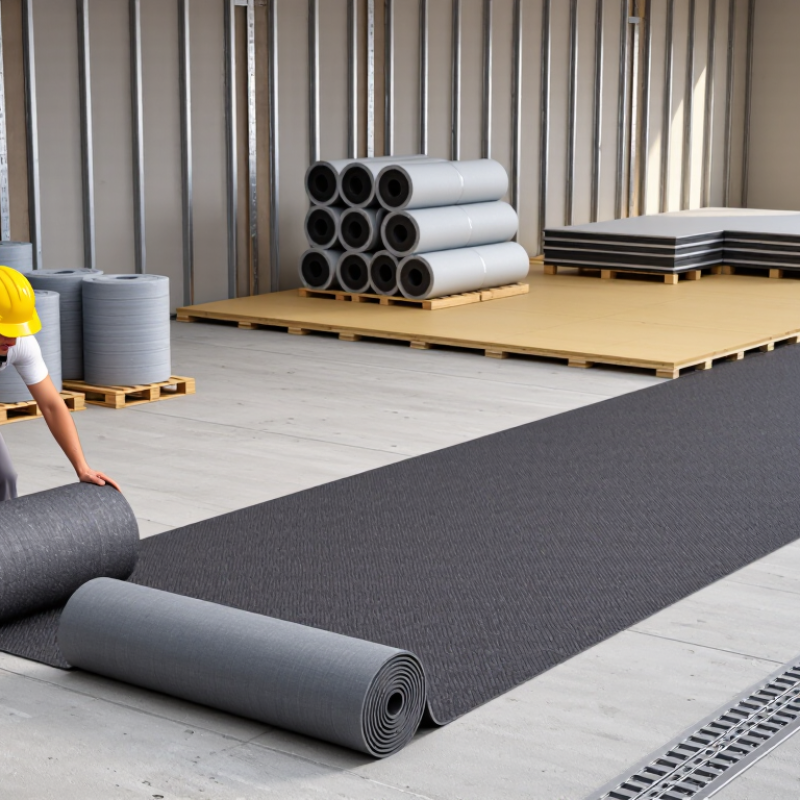
Installation can decide the final result. Place the membrane continuously, with sealed joints and tight perimeter detailing. Avoid punctures from screws, pipes, or careless cutting. Floating floors need separation from walls, while partitions need sealed edges and protected service penetrations. I once saw a good membrane underperform because a small rigid contact bridged the floor. It was frustrating, but useful.

Tips: Compare test data under similar systems, not isolated material claims. Touch the sample and check its flexibility. Confirm the finished build-up fits doors, stairs, and vents. Leave room for mistakes. A perfect drawing rarely becomes a perfect installation.

How to Choose the Best Acoustic Isolation Membrane? - How to Compare Materials, Thicknesses, and Installation Methods?

Material Type Typical Thickness Typical Surface Mass or Density Primary Acoustic Function Best Applications Installation Method Key Advantages Limitations and Checks Indicative Suitability
Mass-Loaded Vinyl Membrane 1.5–6 mm Approximately 2–10 kg/m², depending mainly on thickness Adds limp mass to reduce airborne sound transmission through walls, ceilings, floors, doors, and service enclosures. Stud partitions, ceiling upgrades, duct or pipe enclosures, door panels, and lightweight building assemblies. Install continuously over or between layers; butt-joint or overlap seams according to the system design; seal perimeter joints and penetrations with compatible acoustic sealant. High mass in a relatively thin layer; flexible; easy to cut; useful where assembly depth is limited. Does not replace decoupling or cavity absorption; unsupported spans may sag; performance depends on airtight joints and correct fixing. Very good for airborne noise
Rubber Acoustic Membrane 3–12 mm Approximately 4–14 kg/m²; density commonly around 900–1,400 kg/m³ Combines added mass with some damping and resilience, helping reduce airborne and impact-related transmission. Floors, walls, ceilings, equipment bases, and junctions requiring a durable flexible layer. Lay continuously beneath a floating floor or sandwich between rigid layers; keep the membrane flat and seal all edges and penetrations. Durable; resistant to compression; suitable for demanding floor and wall details. Heavier and often more difficult to handle than thin vinyl; verify compatibility with adhesives, floor finishes, and fire requirements. Very good for mixed noise control
Recycled Rubber Underlayment 3–10 mm Approximately 2–8 kg/m²; density commonly around 600–900 kg/m³ Provides resilient separation and damping beneath floor finishes, reducing impact sound and some structure-borne vibration. Floating floors, laminate, engineered timber, tile systems, and areas exposed to footfall noise. Install over a clean, level substrate with tightly butted seams; turn up or isolate edges where the floor system requires perimeter separation. Good resilience; useful for impact sound; tolerates moderate substrate irregularities better than very thin films. Impact performance varies substantially with dynamic stiffness, thickness, load, and floor construction; it is not a complete airborne sound barrier by itself. Excellent for impact noise
Cork-Rubber Composite Membrane 3–10 mm Approximately 2–7 kg/m²; density commonly around 450–800 kg/m³ Provides resilient separation and damping for impact and vibration control. Floating floors, timber floors, partitions, and applications where low odor and renewable content are priorities. Install beneath the floating layer or between rigid components; use continuous coverage and prevent rigid bridges at edges and fasteners. Good damping; relatively easy to handle; can provide a balanced acoustic and thermal underlay function. Usually provides less added mass than dense vinyl or rubber; moisture, compressive creep, and fire classification must be checked for the application. Good for impact and vibration
Polyethylene or Polyolefin Acoustic Foam 2–10 mm Approximately 0.1–0.8 kg/m², depending on thickness and grade Provides resilient separation and limited impact-sound reduction; it does not provide substantial airborne sound insulation through mass. Under floating floors, laminate, engineered wood, and selected lightweight floor systems. Lay continuously beneath the floor finish; tape joints where required; maintain perimeter isolation and avoid compression beyond the product design. Lightweight; moisture-resistant options are available; simple and fast to install. Low mass limits airborne sound improvement; long-term compression and dynamic stiffness are important; avoid using it as the only wall or ceiling isolation layer. Good for basic impact control
Cork Underlayment 3–12 mm Approximately 1–4 kg/m²; density commonly around 100–350 kg/m³ Provides resilient separation and moderate damping beneath floor finishes. Residential floors, timber floors, floating floor systems, and projects prioritizing natural materials. Install on a dry, level substrate with close-fitting joints; follow the flooring system requirements for adhesive, vapor control, and perimeter gaps. Renewable material; easy to cut; provides some thermal comfort and impact-noise reduction. Lower mass and resilience than many rubber products; performance can change with moisture, load, and permanent compression. Moderate for impact control
Composite Barrier-and-Foam Membrane 8–25 mm Approximately 2–10 kg/m², depending on barrier and foam layers Combines a dense barrier for airborne sound with a resilient layer for damping and decoupling. Wall and ceiling retrofit systems, equipment enclosures, floor assemblies, and areas where several acoustic functions are required in one product. Install with the dense layer and resilient layer oriented according to the tested assembly; maintain continuous coverage and seal all joints and penetrations. Can simplify multi-layer construction; provides mass, damping, and separation in one assembly component. Greater thickness and cost; product orientation matters; tested-system data is essential because generic material properties cannot predict final field performance. Very good for multi-purpose isolation
Selection note: Choose thickness by required surface mass, available construction depth, expected loads, and the tested assembly—not by thickness alone. For airborne noise, prioritize mass, airtightness, and decoupling. For impact noise, prioritize resilient separation and verified dynamic stiffness. All stated values are typical industry ranges; actual acoustic performance depends on the complete floor, wall, or ceiling system, workmanship, flanking paths, fire requirements, moisture exposure, and local building regulations.

How to Check Safety, Durability, and Long-Term Value?

How to Choose the Best Acoustic Isolation Membrane?

Safety should guide every membrane choice, not just sound reduction. Check the technical data sheet for fire performance, chemical emissions, and installation limits. Request independent test reports when available. A product used beneath flooring may face different risks than one installed behind walls. Confirm that adhesives, sealants, and membranes are compatible. Poor compatibility can create odors, weak bonds, or early failure. Ventilation matters during installation. Small details matter.

Durability depends on pressure, moisture, temperature, and movement. Ask whether the membrane resists compression after years beneath heavy furniture or equipment. Look for clear thickness tolerances and documented aging tests. Inspect the surface for tears, uneven edges, or brittle areas before installation. A membrane that feels flexible may still perform poorly under repeated loading. Follow the manufacturer’s instructions carefully, especially at seams and wall junctions. Many failures begin there.

Long-term value includes labor, maintenance, and replacement risk. A cheaper roll may require more preparation or create inconsistent coverage. Measure the actual area, including waste around corners and openings. Speak with an experienced acoustic contractor about the room’s structure and expected impact noise. Their advice should match verified technical evidence. No checklist is perfect. I would also question impressive claims without test conditions, sample sizes, or laboratory details. A reliable choice balances tested safety, stable performance, and practical installation time.