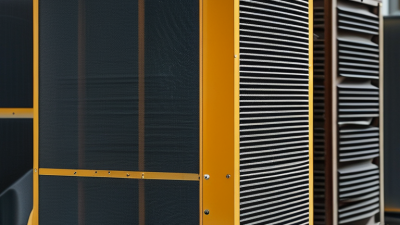
China Top 10 Acoustic Vent Manufacturers for Global Buyers?
Choosing the right Acoustic Vent supplier in China requires more than comparing catalog prices. Global buyers need measurable airflow, verified sound attenuation, stable production, and responsive technical support. A vent may look compact, yet its geometry can influence pressure drop, rain protection, and speech privacy inside equipment rooms.
Leo Beranek, a respected acoustical engineer, stated, “Noise is unwanted sound.” This simple observation remains useful when evaluating acoustic ventilation products. A high-quality vent should reduce unwanted noise without restricting the air needed for cooling. That balance is difficult. It depends on baffle design, absorber density, frame construction, installation depth, and the surrounding enclosure.
This guide examines ten Chinese Acoustic Vent manufacturers for international purchasing teams. It considers product specialization, laboratory data, customization capacity, export experience, and quality-control practices. Attention is also given to aluminum frames, weather-resistant finishes, fire-performance information, and acoustic test methods. These details matter on a factory floor.
No ranking is perfect.
Supplier websites can present incomplete information. Some published test values may not match real installation conditions. Buyers should request current reports, drawings, tolerances, and sample units before approving volume orders. Independent testing can also reveal performance gaps.
The selected manufacturers represent different strengths, including industrial ventilation, enclosure cooling, HVAC noise control, and custom engineering. This comparison is designed for practical decision-making. It does not replace project-specific acoustic calculations. Instead, it helps buyers ask sharper questions, identify credible suppliers, and avoid choosing solely by price.
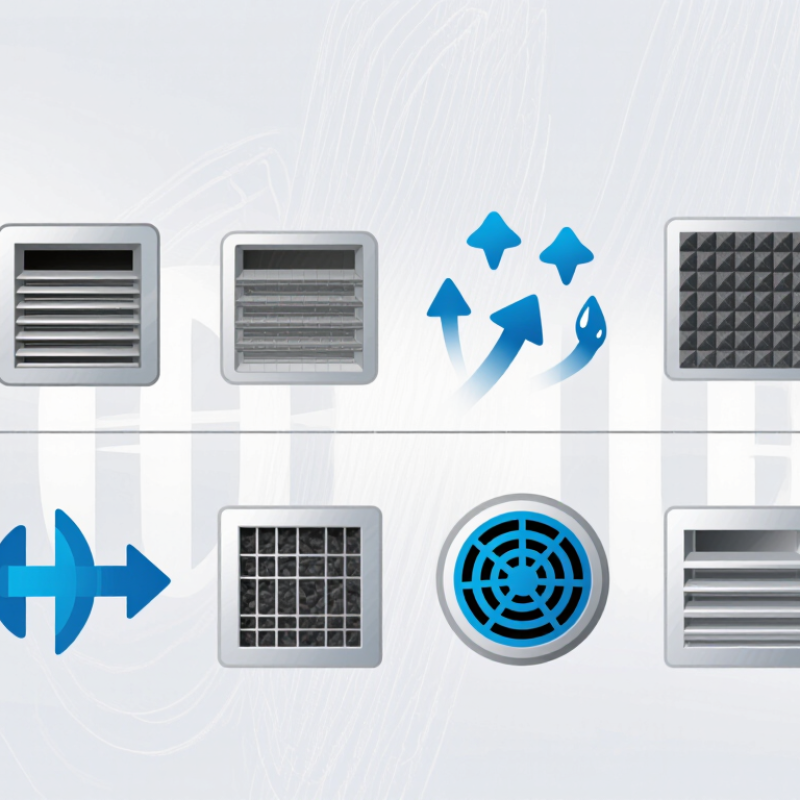
What Are Acoustic Vents and Why Do Global Buyers Need Them?
Acoustic vents are ventilation components that let air pass while reducing transmitted sound. They usually combine perforated faces, mineral cores, or labyrinthine baffles inside a compact frame. Unlike a sealed wall, a vent must balance airflow, pressure loss, and acoustic attenuation. That balance is easily underestimated.
Global buyers need them in offices, hospitals, factories, transport facilities, and data rooms. The World Health Organization’s Environmental Noise Guidelines for the European Region identify road traffic exposure above 53 dB Lden as a level linked with harmful health effects. This makes ventilation openings important in buildings near highways, airports, and dense city streets. A quiet room still needs fresh air. That is the design conflict.
Testing should follow recognized methods, including ISO 10140 for laboratory sound insulation and ISO 7235 for ducted silencers and air-terminal devices. Buyers should request insertion loss, airflow rate, pressure drop, and octave-band results, not one attractive decibel figure. The ASHRAE Handbook also stresses that regenerated airflow noise can become significant when pressure rises. Small errors matter. A vent may perform well in a laboratory but disappoint beside a rattling grille, poor seal, or oversized fan. I have found that installation details often deserve as much attention as the product specification. Weather exposure, dust loading, cleaning access, and local fire requirements also influence long-term reliability. The specification is rarely perfect. It should be reviewed against the actual room, airflow, and noise source.
How to Evaluate China’s Acoustic Vent Manufacturers
Evaluating China’s acoustic vent manufacturers requires more than comparing catalog prices.
Start with the vent’s actual application: server rooms, studios, clean spaces, or equipment enclosures. Check airflow volume, pressure drop, sound transmission loss, dimensions, and operating temperature. A suitable manufacturer should explain how these values were measured, not merely list attractive figures.
Ask for recent laboratory reports, material specifications, and production drawings.
Reports should identify the test method, sample size, frequency range, and testing laboratory. For demanding projects, verify results against recognized standards such as ISO or ASTM methods. Request samples with the same core, frame, finish, and seal used in mass production. Small design changes can affect both airflow and acoustic performance.
Inspect manufacturing controls through photos, video audits, or an independent factory visit.
Look for incoming material checks, dimensional inspection, welding quality, coating thickness, and final packing protection. Traceable batch records matter when replacement parts are needed. I still find this step easy to underestimate.
A polished sample may hide inconsistent production. Ask how the supplier handles failed tests, tooling changes, and delivery delays. Clear technical answers are often more valuable than the lowest quotation. Use a written specification, because vague acoustic claims can create expensive disputes later.
China’s Top 10 Acoustic Vent Manufacturers by Product Strengths
China Top 10 Acoustic Vent Manufacturers for Global Buyers?
China’s top ten acoustic vent manufacturers stand out through different product strengths. One focuses on compact vents for control cabinets. Another develops high-airflow designs for outdoor telecom enclosures. Some specialize in waterproof, breathable membranes for harsh environments. Others offer flame-resistant housings, corrosion-resistant metals, or custom mounting threads. These differences matter more than factory size.
Experienced buyers usually compare airflow, insertion loss, ingress protection, and operating temperature. A strong manufacturer provides test data, drawings, material details, and sample support. Several Chinese suppliers also combine acoustic vents with pressure equalization technology. This helps protect microphones, sensors, speakers, and sealed electronics from pressure changes. Product consistency remains a key advantage when production uses automated assembly and controlled membrane placement.
Do not trust impressive numbers alone. A vent may reduce noise but restrict airflow. A compact model may fit well but perform poorly after dust exposure. I would request samples, inspect adhesive bonding, and repeat tests inside the target enclosure. Ask for reports from recognized laboratories, when available. Factory audits can also reveal packaging weaknesses, uneven quality checks, or slow engineering responses. The best supplier is not always the cheapest. It is the one that explains limitations clearly and improves the design when field feedback exposes a weakness.
How to Compare Acoustic Vent Quality, Certifications, and Pricing
For global buyers comparing the top ten acoustic vent manufacturers, test evidence should come before catalogue claims. Ask for insertion-loss and pressure-drop results measured under ISO 7235 conditions. A vent that blocks 30 dB but causes excessive resistance may increase fan energy and operating noise. UNEP’s 2023 Global Status Report for Buildings and Construction states that buildings produce about 26% of global energy-related emissions. Therefore, airflow efficiency deserves equal attention.
Check laboratory accreditation, calibration dates, and the exact test configuration. ISO 10140 testing can support building-element claims, but it does not automatically prove every vent size performs equally. Request data at the specified airflow, frequency bands, and face velocity. Small details matter. Inspect the frame, seals, weather protection, and corrosion-resistant finish. Poor sealing can erase impressive laboratory results.
Certifications should match the destination market and installation risk. Fire, smoke, hygiene, and environmental requirements may differ by project. Pricing comparisons should include pressure loss, delivery, testing, replacement filters, and installation labor. A low unit price can become expensive after redesign or site modifications. The 2018 WHO Environmental Noise Guidelines recommend less than 30 dB(A) indoors during nighttime for good sleep, giving buyers a practical acoustic reference. Still, published figures are not field guarantees. I would request a sample, inspect its fit, and repeat airflow measurements before approving a large order. Some comparisons remain imperfect. That is worth admitting.