Top 10 Black ePTFE Membrane Manufacturers Worldwide?
Black Eptfe Membrane has become an important material for demanding filtration, ventilation, and protective applications. Its dark appearance is only one visible feature. Performance depends on pore size, air permeability, water resistance, chemical stability, and production consistency. Across global markets, manufacturers compete through material engineering, coating control, testing capability, and application support.
Robert W. Gore, the engineer associated with expanded PTFE, described its origin clearly: “The discovery of expanded PTFE was a totally unexpected and serendipitous event.” His words still matter today. Innovation often begins with an unexpected result, but reliable manufacturing requires disciplined control. Black pigmentation, for example, can influence thermal behavior, surface appearance, and batch uniformity. These details deserve careful review.
This introduction examines ten leading Black Eptfe Membrane manufacturers worldwide. The selection should not depend only on company size or promotional claims. It should consider documented technical data, membrane structure, production capacity, quality certifications, customization options, and customer application experience. Automotive vents, outdoor electronics, industrial filters, and building envelopes may require very different specifications. One membrane cannot serve every situation.
Some public information remains incomplete. That matters. Supplier websites may describe benefits without publishing comparable test conditions. Therefore, the ranking should be viewed as an informed industry guide, not an absolute judgment. Readers should verify test reports, service life, installation requirements, and regional support before choosing a supplier. Practical performance may differ from laboratory results. That uncertainty deserves honest attention.
Definition and Key Properties of Black ePTFE Membranes
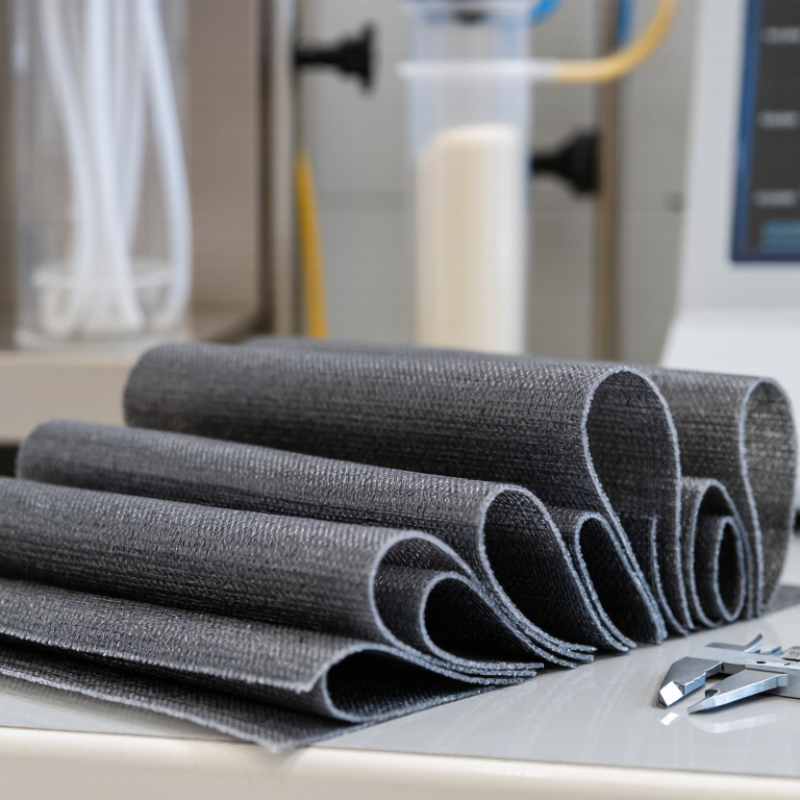
Black expanded polytetrafluoroethylene, or black ePTFE, is a microporous membrane made by stretching PTFE resin. The process creates interconnected pores. These pores can block liquid water while allowing vapor and selected gases to pass. The membrane is naturally hydrophobic and resists acids, solvents, and outdoor exposure. It is also lightweight. Very useful in harsh environments.
Grand View Research estimated the global PTFE market at about USD 3.1 billion in 2023. Its 2024–2030 outlook indicates growth near 6% annually. This broader figure includes resins, coatings, and membranes, not black ePTFE alone. Still, it shows strong demand for fluoropolymer materials. In testing, ASTM F316 methods can measure bubble point and mean flow pore size. These values help engineers compare waterproofing and airflow performance. A membrane may look similar but perform differently.
Black color usually comes from carbon-based pigments or other stable additives. It can reduce visible light transmission and improve visual concealment. It may also support ultraviolet shielding. However, black surfaces absorb more solar heat. That can increase temperatures inside outdoor housings. Color alone does not prove better durability. Engineers should examine pore structure, thickness, air permeability, hydrostatic resistance, and seam behavior. One practical weakness remains: published data often describe ePTFE generally, rather than black grades specifically. Careful application testing is still necessary.
Core Applications Across Industrial and Commercial Sectors
Black ePTFE membrane manufacturers serve demanding industrial and commercial applications where airflow, moisture protection, and durability must work together. The black surface can reduce visible contamination and limit light exposure in outdoor equipment. However, color alone does not prove better performance.
In industrial settings, these membranes support pressure-equalizing vents for motors, sensors, control cabinets, and battery housings. They help release internal pressure while blocking rain, dust, and fine particles.
Filtration systems also use ePTFE layers for low-pressure air movement and stable particle capture. Commercial applications include outdoor lighting, HVAC equipment, protective clothing, footwear, and electronic devices.
Each use requires careful attention to pore size, air permeability, hydrostatic resistance, chemical compatibility, and temperature limits. A membrane that performs well in a clean enclosure may fail near oil vapor or abrasive dust.
Tips:
Ask for independent test data, not only catalog claims. Check the complete laminate structure and sealing method. Confirm performance after heat, humidity, flexing, and chemical exposure. Field evaluations often reveal weaknesses missed in laboratory testing. That matters.
Selection is rarely perfect. Installation pressure, uneven surfaces, and poor vent placement can reduce reliability. Engineers should review the full operating environment and define replacement expectations early. The strongest choice is not always the thickest membrane. It is the one matched to actual exposure, airflow needs, and service conditions.
Standards for Evaluating Global ePTFE Membrane Manufacturers
Evaluating global black ePTFE membrane manufacturers requires more than comparing prices. The assessment should cover pore size, air permeability, bubble point, hydrostatic resistance, tensile strength, and thickness consistency. Black pigmentation must remain stable under sunlight, heat, cleaning chemicals, and repeated flexing. A dark surface is not automatically durable. Testing methods and sample conditioning matter.
MarketsandMarkets estimates the global membrane filtration market could grow from about USD 10.5 billion in 2024 to USD 16.5 billion by 2029. This growth increases pressure on manufacturers to prove capacity and consistency. Review ISO 9001 systems, laboratory calibration records, batch traceability, and documented process controls. Ask for independent test reports, not only internal brochures. Production experience also matters. A supplier should explain coating uniformity, pore formation, lamination control, and failure analysis in practical terms.
Tips: Request three production batches. Compare results, not one sample. Check UV exposure data, color change, seam strength, and long-term permeability. Confirm whether reported values follow recognized ASTM or ISO methods. Also review energy use, scrap rates, recycled content, and end-of-life planning. The 2023 World Filtration report from The Freedonia Group identifies operating cost and durability as important filtration purchasing factors. Still, sustainability claims can be vague. I would treat them carefully and verify the underlying calculations. A lower-carbon process may not deliver a longer service life.
Top 10 Black ePTFE Membrane Manufacturers Worldwide
Top 10 Black ePTFE Membrane Manufacturers Worldwide
The top 10 black ePTFE membrane manufacturers worldwide are usually assessed by more than production volume. Their technical strength includes pore-size control, coating uniformity, air permeability, and long-term weather resistance. Black pigmentation can improve light shielding, but it may also affect heat absorption. That trade-off deserves attention.
MarketsandMarkets’ 2024 membrane filtration analysis identifies water treatment, industrial filtration, and medical applications as major demand areas. Grand View Research also reports continued growth in advanced membrane materials, driven by stricter efficiency requirements and compact device design. For black ePTFE, automotive venting and outdoor protection remain practical markets. A reliable manufacturer should provide pore distribution data, hydrostatic pressure results, and thermal-aging records. ISO 29463 and ASTM-related testing methods can support comparisons, although laboratory results may not fully reflect field exposure.
Tips: Request samples from at least three manufacturers. Check color consistency after heat and ultraviolet testing. Ask whether fluoropolymer processing is internally controlled. Do not judge quality by surface appearance alone. A smooth black film may still show weak bonding or unstable airflow. The “top 10” ranking is therefore useful, but not absolute. Application fit, audit evidence, and transparent test conditions should carry more weight than promotional claims.
Market Trends and Selection Considerations for Buyers
Top 10 Black ePTFE Membrane Manufacturers Worldwide?
Black ePTFE membranes are gaining attention in filtration, outdoor equipment, automotive systems, and industrial protection. Their dark surface can reduce visible staining and improve product appearance. Market demand is also shifting toward thinner membranes, stronger seams, and lower environmental impact. Buyers now examine air permeability, waterproof ratings, chemical resistance, and operating temperature together.
The best manufacturer is not always the largest one. Production consistency matters more than impressive brochures. Ask for recent test reports, sample rolls, and batch-to-batch data. Check pore size, thickness tolerance, tensile strength, and coating adhesion. A supplier with strong technical support can help prevent costly design changes. However, test results may differ between laboratories. That detail deserves attention.
Tips: Define the working environment before requesting quotations. Compare samples under heat, moisture, pressure, and repeated flexing. Confirm minimum order quantities, lead times, packaging, and quality-control procedures. Request traceability records for each production batch. Avoid choosing only by price. A cheaper membrane may require thicker layers or more frequent replacement. Also, black pigmentation can influence heat absorption, which may affect outdoor performance. Many buyers overlook this point. Pilot testing is wise, even when specifications look suitable.